
Jammu — Duggar Pradesh — Destination — Mangni to Vidai
Jammu wedding photography, every ritual documented
From the Mangni to the Vidai, candid coverage of Dogra wedding traditions, in Jammu or wherever your wedding takes you.
Contact Us →Every ritual, covered
A Dogra wedding from Jammu carries a quiet dignity shaped by the hills of Duggar Pradesh — a decorated Vedi with hand-crafted parrots, a groom striking a Toran at the bride’s doorway, a sister-in-law hiding his shoes and refusing to give them back without a proper exchange. At Yatish Photography, we photograph Dogra weddings from Jammu — whether hosted in the region itself or as a destination wedding in Bangalore — the way they’re actually meant to be seen: unhurried, warm, and rooted in customs that are distinctly its own rather than borrowed from neighbouring Punjab or Himachal.
We’ve kept our coverage to the handful of rituals that carry the most weight and the most visual richness in a Dogra wedding, rather than padding the page with every minor custom. Each of these deserves careful, specific attention.
Every Ritual of a Jammu Dogra Wedding,
Mangni — The Formal Engagement
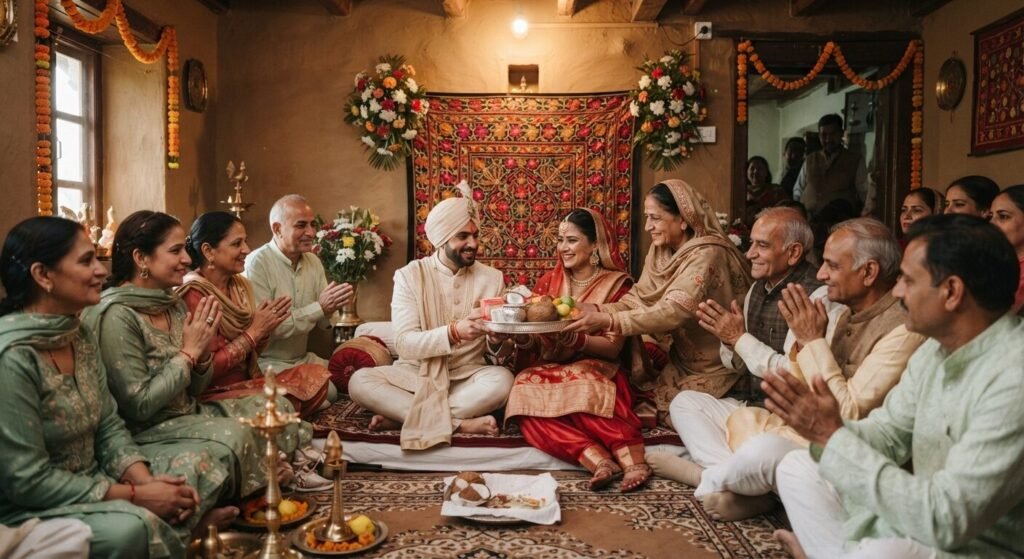
The Mangni marks the formal engagement, where both families gather to exchange gifts and blessings and confirm the alliance ahead of the wedding itself. It’s a measured, dignified occasion in Dogra households, usually involving a small puja and the presentation of gifts from the groom’s side to the bride. We photograph the Mangni with attention to the formal exchanges and the first genuine photographs of both families together, keeping the framing calm and observational rather than staged.
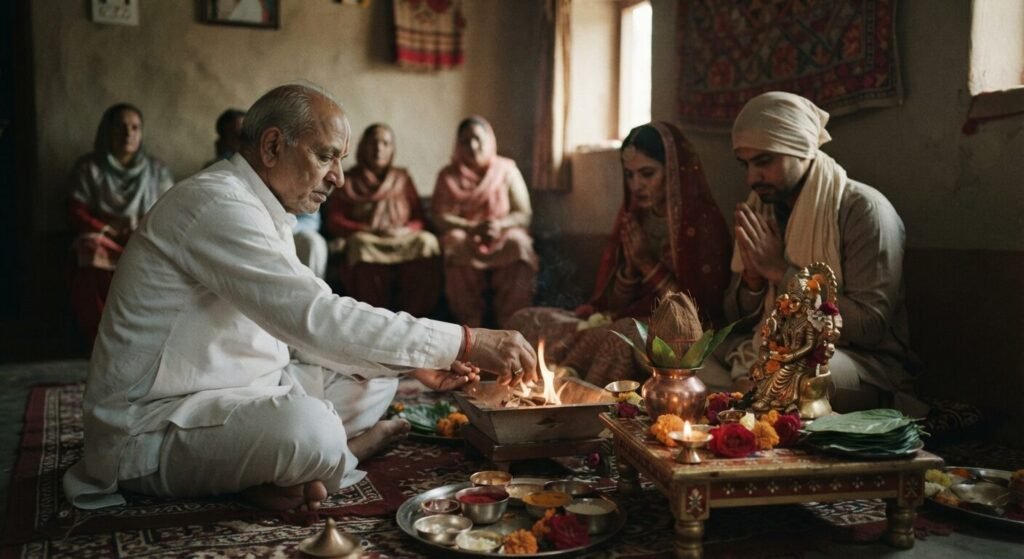
In the Devgon, held separately at the bride’s and groom’s homes in the days before the wedding, the families offer prayers to their family deities and ancestors, seeking blessings for a smooth and prosperous marriage. It’s a quiet, priest-led ritual attended mostly by close family, and we shoot it with restraint — soft natural light, minimal movement, and close attention to the puja items and the family’s expressions during the prayers.
Devgon — Seeking Blessings Before the Wedding
Mehndi — Henna and Song
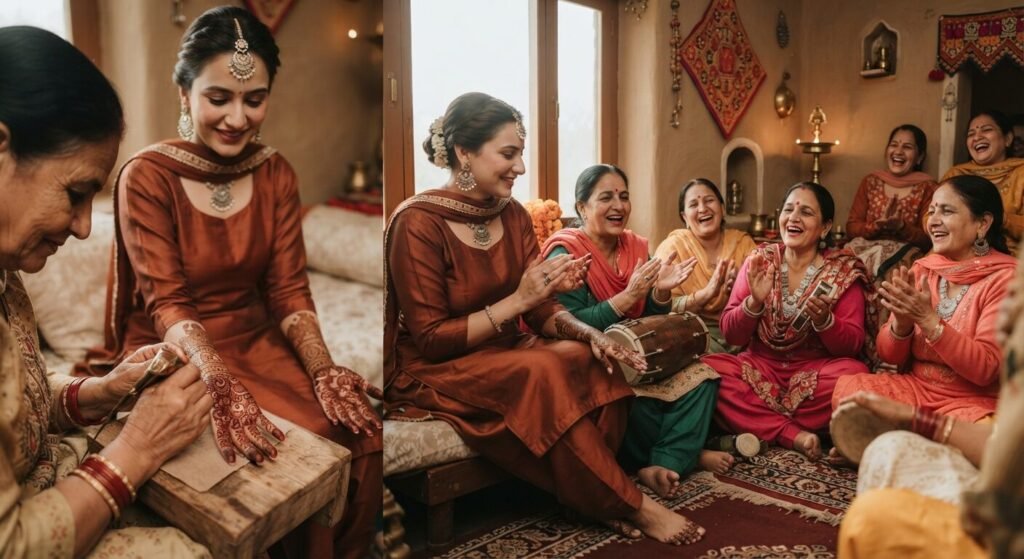
The Mehndi ceremony brings intricate henna patterns to the bride’s hands and feet, typically accompanied by traditional Dogri folk songs sung by the women of the family as the artist works. Compared to the larger, more performance-driven Mehndi events seen in Punjabi or Rajasthani weddings, a Dogra Mehndi tends to be a smaller, more personal gathering. We shoot it with a mix of macro detail on the henna work and candid wider shots of the singing happening around the bride.
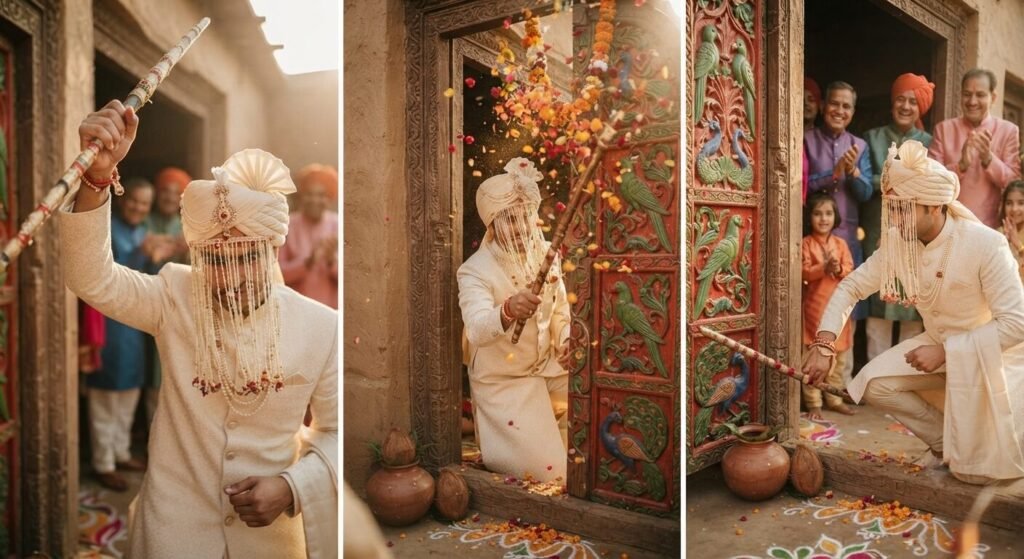
On arriving at the wedding venue, the groom performs one of the most visually distinctive rituals of a Dogra wedding: striking the Toran, an ornamental gateway traditionally decorated with hand-crafted wooden parrots, with a ceremonial stick, symbolically claiming his place at the threshold before the bride’s family formally welcomes him inside. This single ritual carries more regional identity than almost anything else in a Jammu wedding, and we treat it as a dedicated shot list item — close framing on the strike itself, the detail of the parrot carvings, and the family’s reaction as he’s welcomed in.
Toran — Striking the Ceremonial Gateway
Vedi Phere — The Sacred Vows at the Decorated Mandap
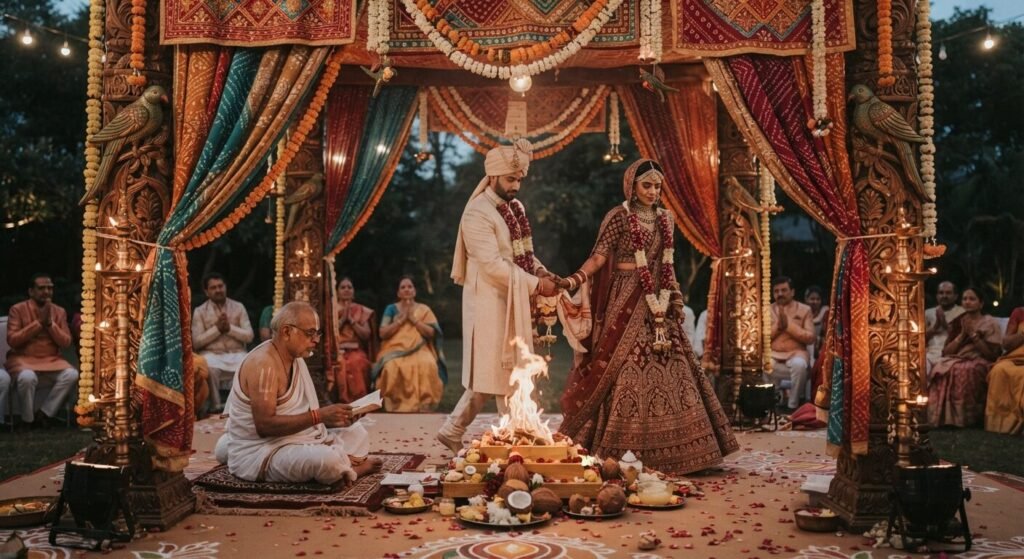
The couple takes their Phere around the sacred fire at the Vedi, a specially constructed and decorated mandap traditionally adorned with daryas (woven textiles) and the same ornamental parrot motifs seen on the Toran, while the priest recites Vedic mantras for each round. This is the ceremonial heart of the wedding, and we photograph it the way we do every sacred fire ceremony we cover — no flash, minimal repositioning, and a clear individual record of each phera rather than a single wide shot that loses the sequence.
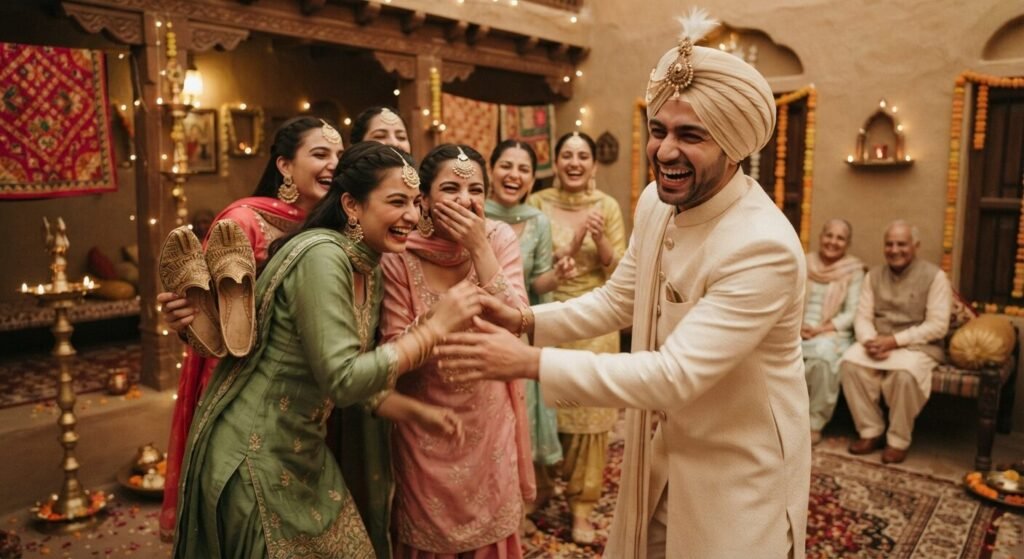
Once the ceremony concludes, the bride’s sisters (Saali) traditionally hide the groom’s shoes and refuse to return them until a suitable amount of money (lagg) is paid, all while teasing him with a traditional Dogri call-and-response song known as Chhand, which the groom is then expected to answer in kind. It’s one of the most genuinely fun, unscripted moments of the entire wedding, and we shoot it exactly as it unfolds — candid, a little chaotic, and full of the actual personalities of the people involved rather than a posed re-enactment.
Joota Chupai and Chhand — Play, Song, and a Little Mischief
Vidai and Griha Pravesh — Farewell and Welcome
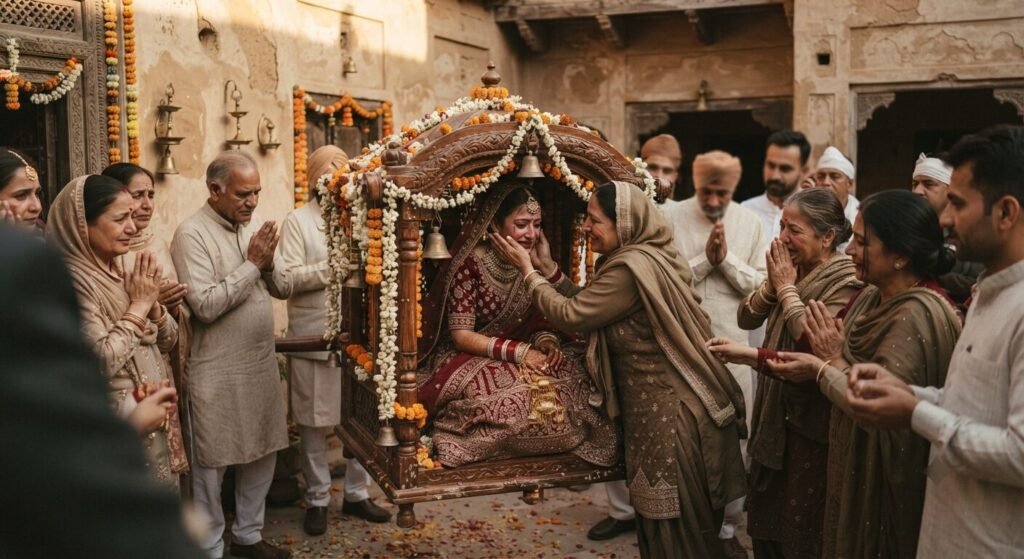
The Vidai sees the bride depart her family home, traditionally seated in a palki (palanquin) accompanied by her brother, marking an emotional goodbye to her parents before beginning her married life; on arrival at her new home, she is welcomed with an aarti, while the groom’s sister stands at the entrance holding a decorated water pot (louta) on her head and collects a customary lagg from her brother before he’s allowed to enter. We treat the Vidai with the same quiet, undirected approach we bring to every farewell ritual across every tradition we cover, then shift into close, warm coverage of the aarti and louta ritual as the couple is welcomed into their new home.
Our Approach to Jammu Wedding Photography
Dogra weddings reward a photography style built around genuine regional detail rather than a generic North Indian template:
- Regionally accurate coverage — the Toran, the Vedi’s parrot motifs, and the Joota Chupai/Chhand exchange are treated as dedicated, planned-for moments, not incidental background.
- Restraint during sacred moments — the Devgon and the Vedi Phere are shot quietly and without flash, in keeping with the solemnity of the rituals themselves.
- Room for genuine mischief — the Joota Chupai and Chhand exchange is one of the liveliest parts of a Dogra wedding, and we shoot it candidly to let that personality come through.
- Destination-ready — for Dogra families hosting weddings outside Jammu, including in Bangalore, we bring the same attention to regional custom wherever the wedding takes place.
What Couples Say
Frequently Asked Questions
What makes Dogra wedding rituals from Jammu different from Punjabi weddings?
While there’s some overlap, Dogra weddings have distinctly regional elements like the Toran strike with its decorated parrot motifs, the Vedi’s daryas and carved details, and the specific Joota Chupai and Chhand exchange sung in Dogri — details we plan for specifically rather than assuming a generic North Indian format.
Do you travel to Jammu for weddings?
Yes, we regularly travel for weddings held in Jammu and across the Duggar region, and we plan our coverage around the specific locations and timing of each ritual.
Do you photograph Dogra weddings hosted outside Jammu?
Yes — many Dogra families now host weddings in cities like Bangalore, and we bring the same ritual-specific coverage regardless of where the wedding takes place.
Will you make sure not to miss the Toran and Joota Chupai rituals?
Yes, these are two of the most visually distinctive parts of a Dogra wedding, and we confirm the timing of both in advance so our team is positioned correctly when they happen.
How soon after the wedding do we receive our photos?
Edited previews are typically shared within a few days, with the full gallery delivered on a timeline confirmed in advance based on the scope of coverage.
Ready to Document Your Jammu Dogra Wedding, Ritual by Ritual? Let’s Talk.