
West Bengal — Bengali Biye — Destination — Ashirbad to Bou Bhaat
West Bengal wedding photography, every ritual documented
From the Ashirbad to the Bou Bhaat, candid coverage of Bengali wedding traditions across Kolkata, West Bengal, or wherever your wedding takes you.
Contact Us →Every ritual, covered
A Bengali wedding, or Biye, is one of the most visually and emotionally layered wedding traditions in India — a bride lifted on a peerhi and carried around the groom seven times by her brothers, betel leaves slowly lowered from her face for the first, breathless glance at him, conch shells and ululations rising the instant their eyes meet. At Yatish Photography, we photograph Bengali Hindu weddings, whether hosted in Kolkata, across West Bengal, or as a destination wedding in Bangalore, with the same patience and attention these ceremonies were built for.
A Bengali wedding typically unfolds across several distinct days — the Gaye Holud, the Biye itself, and the Bou Bhaat, often held separately rather than compressed into one event. We plan our coverage around that full arc, since each day carries its own rituals and its own visual character.
Every Ritual of a Bengali Wedding
Ashirbad — The Blessing That Begins It All
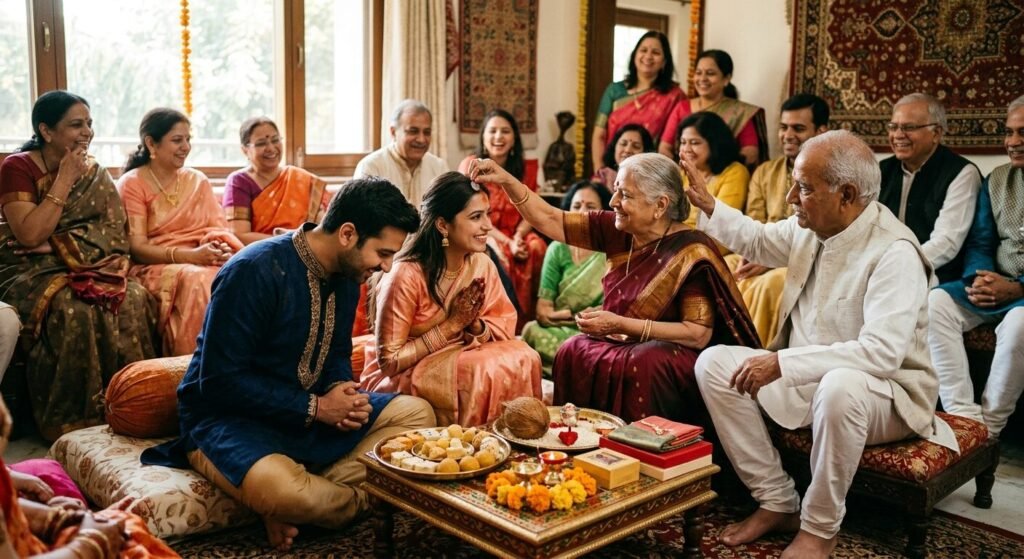
The Ashirbad marks the formal start of the wedding process, where the elders of the groom’s family visit the bride to bless her — sprinkling husked rice and durba grass over her head and presenting gold ornaments — before the bride’s family does the same for the groom. It’s a warm, intimate ceremony, and we photograph it with close attention to the blessing gesture itself and the genuine emotion on both families’ faces as the alliance is formally accepted.
Held a day or two before the wedding, the Aiburo Bhaat is a farewell feast at each of the bride’s and groom’s own homes, typically cooked by their mothers using their favourite dishes, marking their final meal as an unmarried person surrounded by loved ones. It’s a comfortable, joyful occasion rather than a performance, and we shoot it candidly — the specific dishes, the family gathered around the table, the small toasts and teasing that inevitably happen.
Aiburo Bhaat — The Last Meal as a Bachelor
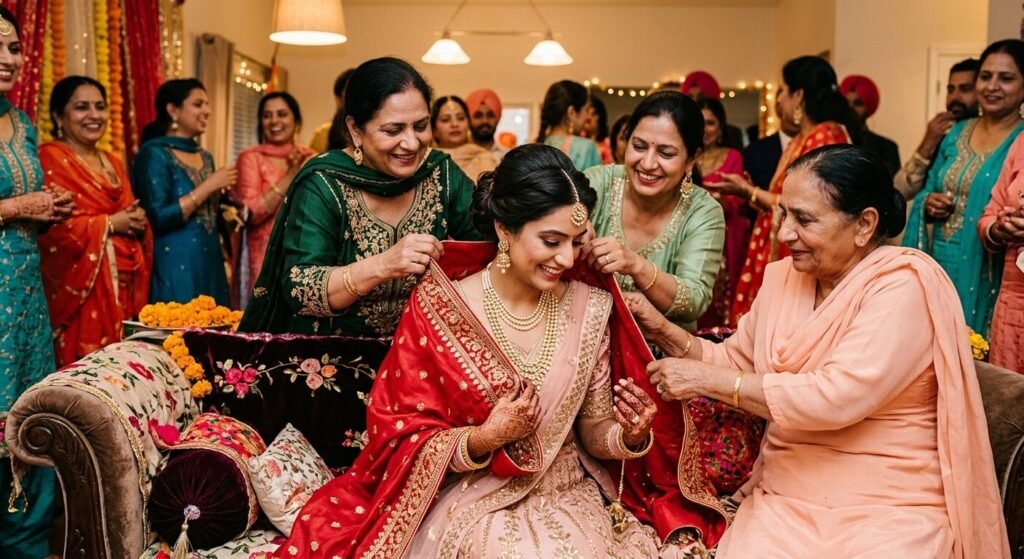
Gaye Holud and Holud Kota — Turmeric, Prepared by Hand
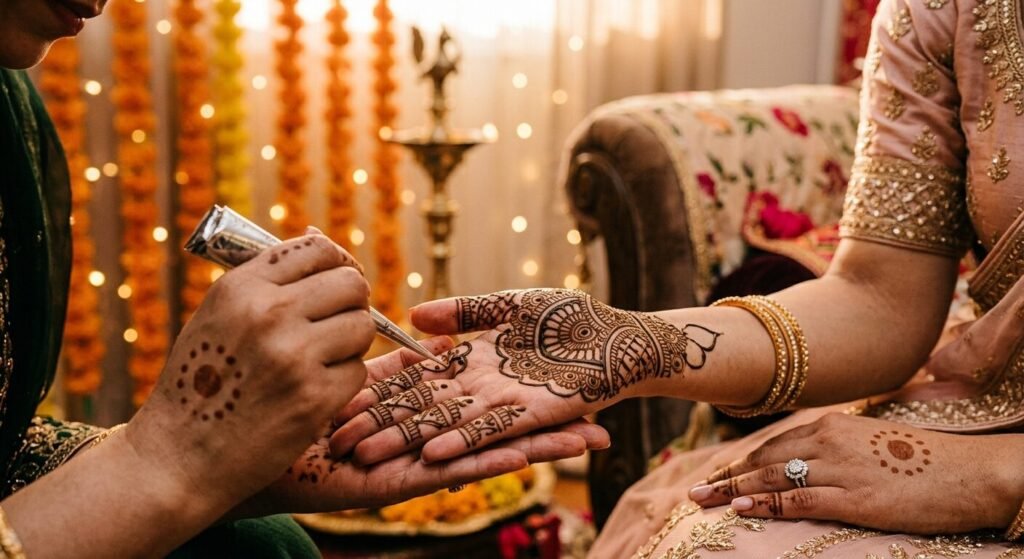
In the Gaye Holud, seven married women first apply turmeric paste to the groom, after which the same paste — along with gifts known as Tatva, including sweets, saris, and a decorated fish — is sent to the bride’s home for her own Holud ceremony. The turmeric itself is often ground by hand in a ritual called Holud Kota, performed by an odd number of married women using a traditional grinding stone. We cover both halves of this ritual, treating the turmeric-grinding as its own detail sequence before moving into the livelier, more colourful application ceremony itself.
On the morning of the wedding, the Dodhi Mangal sees the bride, accompanied by married women of the family, offer prayers to the household deities and eat a small meal of curd and flattened rice before the day’s rituals formally begin. It’s a quiet, early ritual, easily overlooked by an unfamiliar photographer, and we make a point of covering it, since it sets an intimate, grounding tone before the larger rituals that follow.
Dodhi Mangal — An Early Morning Blessing
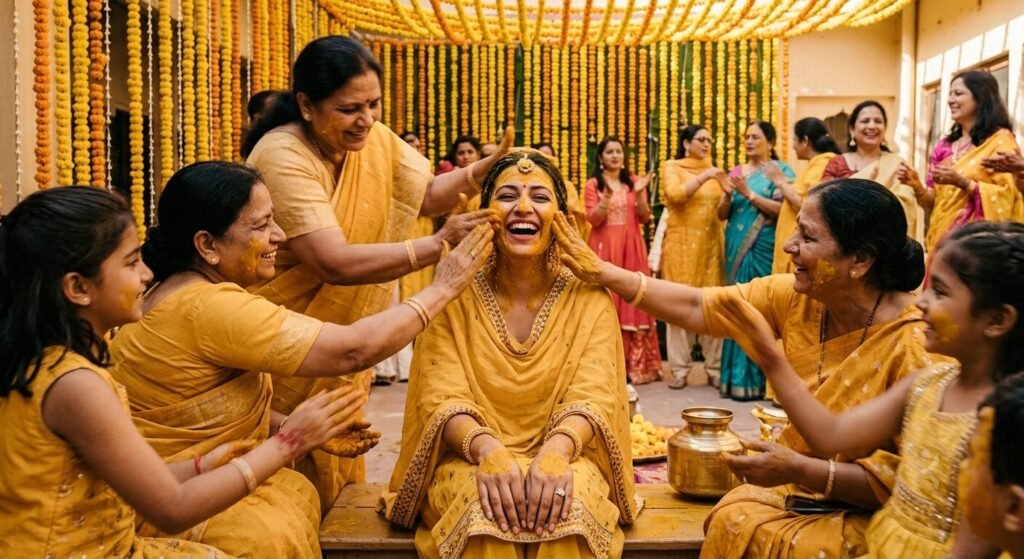
Bor Boron and Potto Bostro — Welcoming the Groom
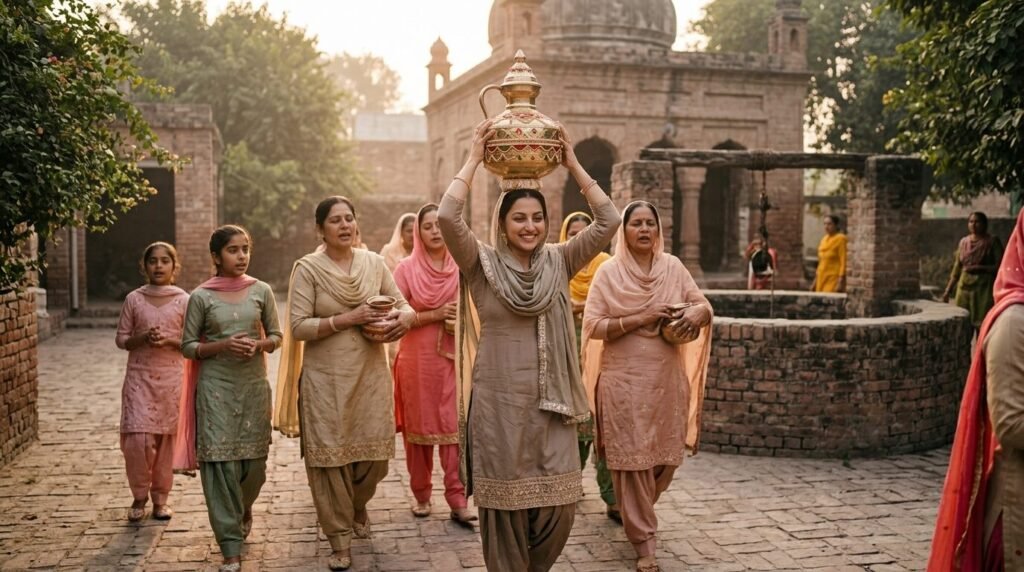
Upon the groom’s arrival at the wedding venue in his procession, or Bor Jatri, the bride’s mother performs the Bor Boron, a formal welcome involving an aarti and a ceremonial forehead mark, before he’s dressed in the Potto Bostro, a special piece of cloth gifted by the bride’s family to mark his entry into the ceremony proper. We photograph this welcome sequence closely, since it happens quickly and sets the tone for the couple’s first shared appearance at the mandap.
In one of the most photographed moments of any Bengali wedding, the bride is lifted on a decorated wooden seat called a peerhi and carried by her brothers around the seated groom in seven full circles, her face covered by betel leaves throughout; at the end of the Saat Paak, she slowly lowers the leaves for the Shubho Drishti, the couple’s first proper glance at one another, met with conch shells and ululations from the gathered family. This sequence is the emotional heart of the wedding, and we position ourselves in advance to capture both the movement of the Saat Paak and the exact moment of the Shubho Drishti, since it happens in a matter of seconds.
Saat Paak and Shubho Drishti — The Bride's Entrance and First Glance
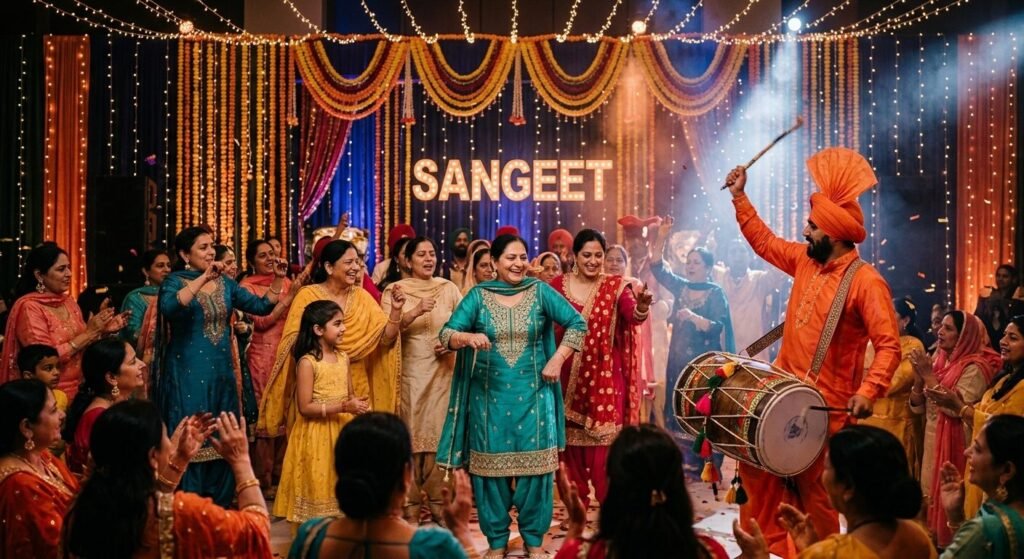
Mala Badal and Sampradan — Garlands and Giving Away the Bride
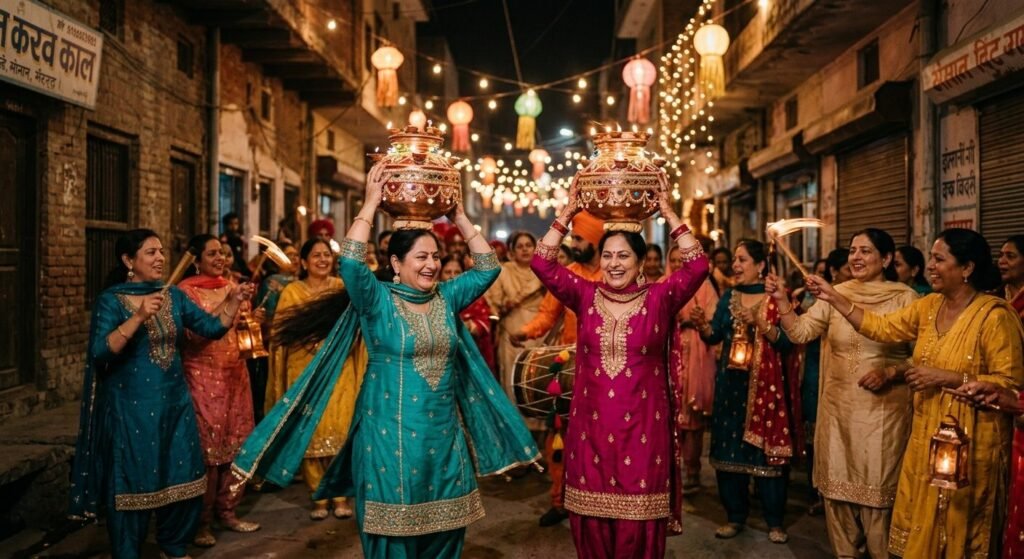
Following the Shubho Drishti, the couple exchanges floral garlands three times in the Mala Badal — a detail distinct to Bengali weddings, where most other traditions exchange garlands only once — before the Sampradan, where the bride’s father formally places her hand in the groom’s as the priest chants mantras, a deeply emotional moment for the family. We shoot the Mala Badal with attention to each of the three exchanges individually, then shift to a quieter, more respectful approach for the Sampradan itself.
The couple takes their Saptapadi around the sacred fire during the Yagna, after which the groom applies sindoor to the bride’s forehead using a coin in the Sindoor Daan, formally marking her as married, often followed by the bride covering her head with her aanchal in a moment known as Ghomta. We photograph this sequence with the restraint we bring to every sacred fire ceremony we cover — no flash, minimal repositioning — with particular attention to the Sindoor Daan itself, since it’s one of the ritual’s most emotionally significant single moments.
Yagna and Sindoor Daan — The Sacred Fire and the Final Mark
Bidaai — The Bride's Farewell
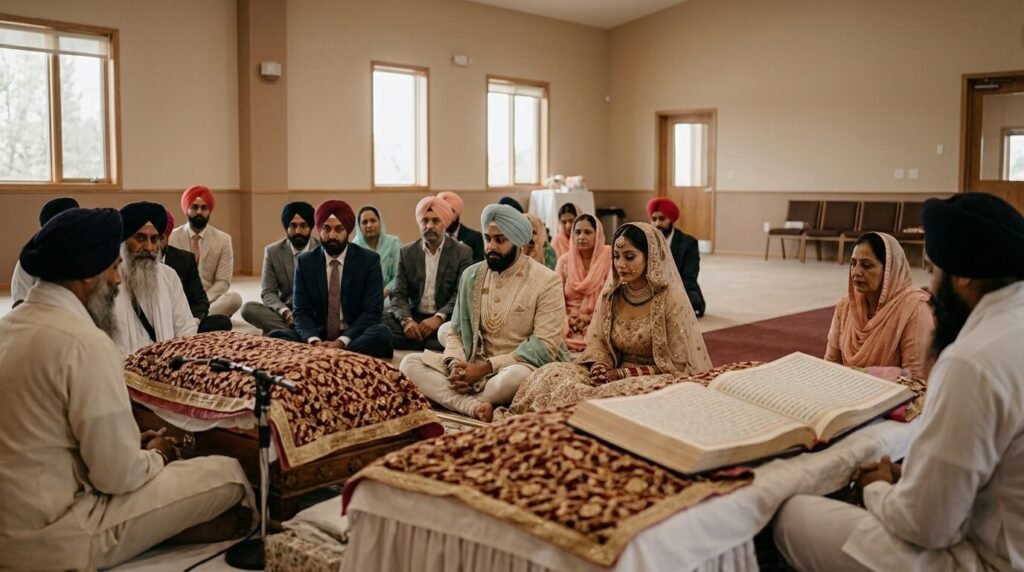
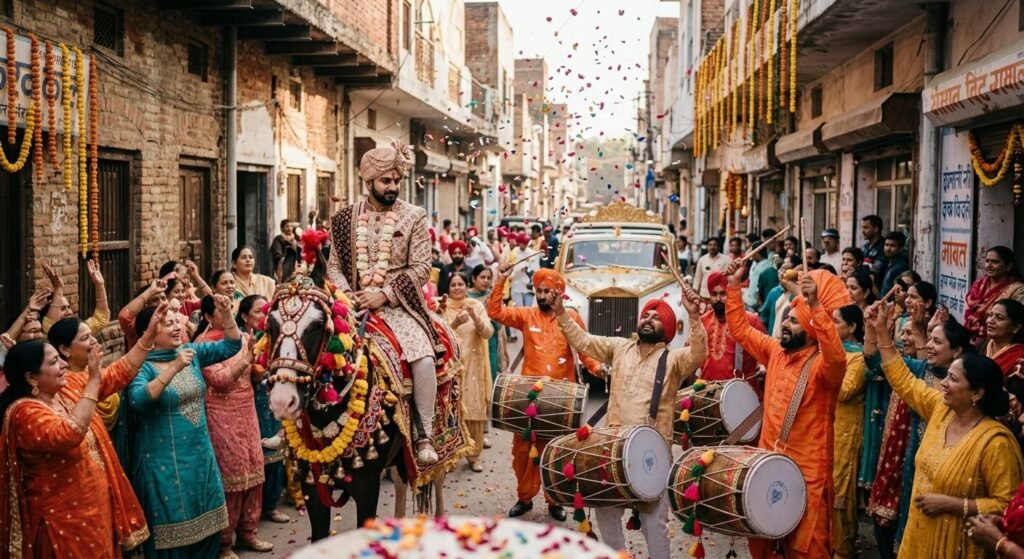
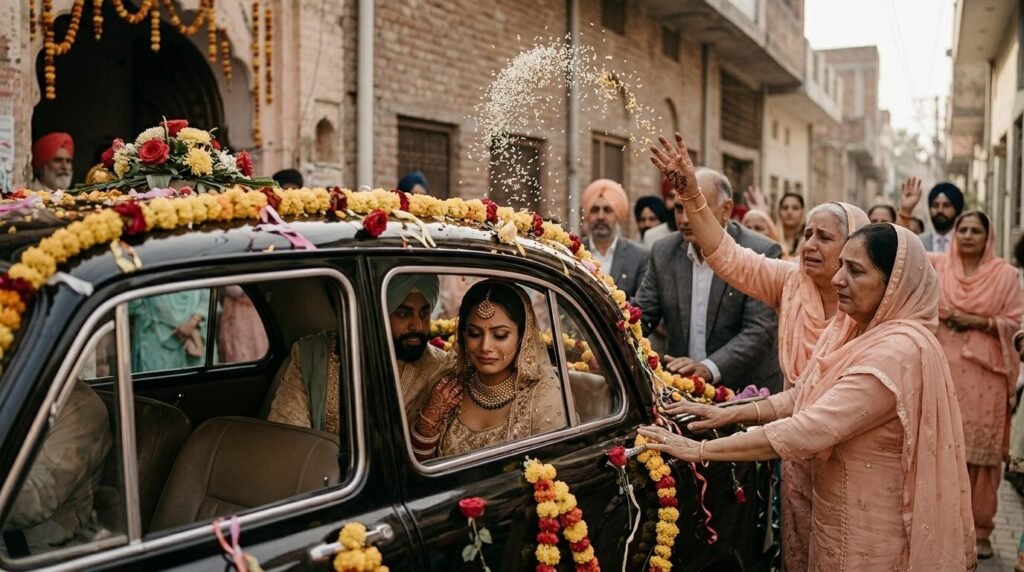
The Bidaai marks the bride’s tearful departure from her family home, where she traditionally throws a handful of rice backward over her shoulder into her mother’s outstretched hands as a final blessing for her family’s prosperity — among Ghoti families this typically happens the same morning, while Bangal tradition holds that the couple should depart before evening. We photograph the Bidaai exactly as we do across every wedding tradition we cover — quietly, without direction or repeated takes.
A day or two after the wedding, the groom’s family hosts the Bou Bhaat, formally welcoming the bride into her new home and introducing her to relatives and friends with a large reception feast — for many families, this second celebration is treated as equally important as the wedding day itself. We recommend including full coverage of the Bou Bhaat in your plan, since it’s often where the bride is seen at her most relaxed, and where some of the warmest, least rushed photographs of the entire wedding tend to happen.
Bou Bhaat — Welcoming the Bride, and a Second Celebration
Our Approach to West Bengal Wedding Photography
Bengali weddings unfold across several distinct days, each with its own visual character, and our coverage is built to match that:
- Multi-day planning — the Gaye Holud, the Biye, and the Bou Bhaat are treated as three connected but distinct events, each with a dedicated shot list.
- Precision for fast-moving moments — the Saat Paak and Shubho Drishti happen quickly and only once, and we position our team in advance to make sure neither is missed.
- Genuine attention to smaller rituals — moments like Dodhi Mangal and Holud Kota are easy for an unfamiliar photographer to skip, and we include them as a matter of course.
- Community-aware timing — we confirm in advance whether your family follows Ghoti or Bangal customs, since small but meaningful differences, like the timing of the Bidaai, vary between them.
- Destination-ready — for Bengali families hosting weddings outside West Bengal, including in Bangalore, we bring the same attention to ritual detail wherever the wedding takes place.
What Couples Say
Frequently Asked Questions
Do you cover the Gaye Holud, Biye, and Bou Bhaat as separate events?
Yes, we treat these as three connected days of coverage rather than a single event, since Bengali weddings are traditionally structured this way and each day has its own distinct rituals.
Will you make sure to capture the Shubho Drishti moment properly?
Yes, we position our team in advance specifically for this sequence, since the Saat Paak and the first glance happen quickly and can’t be repeated.
Do Ghoti and Bangal families follow different wedding customs?
There’s significant overlap, but some details differ — for instance, the timing of the Bidaai — and we confirm your family’s specific customs in advance so our coverage plan matches your actual wedding.
Do you photograph Bengali weddings hosted outside West Bengal?
Yes — many Bengali families now host weddings in cities like Bangalore, and we bring the same attention to regional ritual detail regardless of where the wedding takes place.
How soon after the wedding do we receive our photos?
Edited previews are typically shared within a few days, with the full gallery delivered on a timeline confirmed in advance based on the scope of coverage.
Ready to Capture Your Punjabi Wedding, Ritual by Ritual? Let’s Script Your Story.