
MEGHALAYA — KHASI & GARO — DESTINATION WEDDING
Meghalaya wedding photography,
every tradition documented
From Khasi and Garo wedding traditions to intimate family ceremonies, candid coverage in Shillong, Meghalaya, or wherever your destination wedding takes you.
Contact Us →Every moment, covered
A Meghalaya wedding doesn’t look like most Indian weddings, and that’s exactly what makes it worth photographing well. The Khasi and Garo communities of Meghalaya are among the few remaining matrilineal societies in the world — lineage, surname, and inheritance pass through the mother, not the father, and a wedding here reflects that from the very first step. At Yatish Photography, we photograph Khasi and Garo weddings, whether hosted in Shillong, the Khasi or Garo Hills, or as a destination wedding in Bangalore, with an approach built around what these ceremonies actually are — intimate, dignified, and structured differently from a typical North or South Indian wedding.
We don’t force a Meghalaya wedding into a template built for elaborate multi-day Hindu ritual weddings. It isn’t one, and pretending otherwise produces inaccurate, tone-deaf content. Instead, we document the specific customs that genuinely define a Khasi or Garo wedding.
Every Moment of a Khasi or Garo Wedding
The Proposal — Ka Iaid Naam
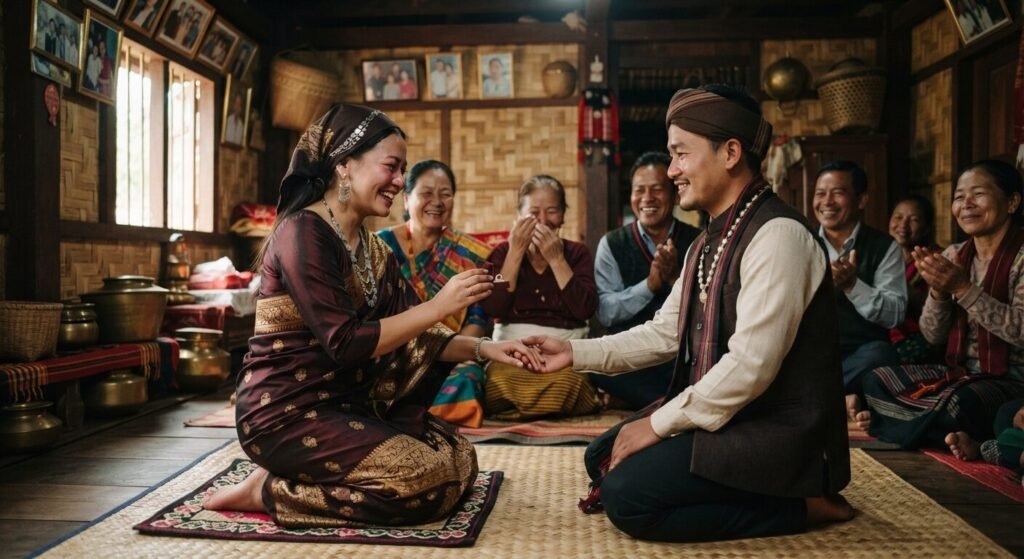
In a detail that distinguishes Khasi courtship from most Indian traditions, it is often the woman who proposes marriage, a reflection of the same matrilineal confidence that shapes the rest of Khasi society. Where families choose to document this moment — sometimes revisited or restaged for photography rather than captured live — we treat it with warmth and a light touch, since it’s one of the details that says the most about the culture behind the wedding itself.
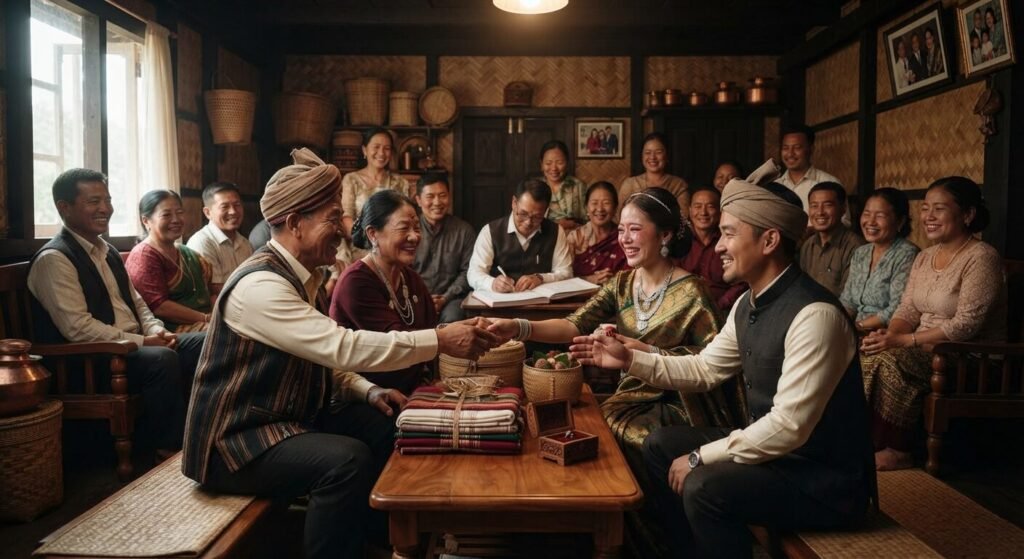
Once both families agree to the match, a formal engagement is held, typically at the bride’s home, where gifts are exchanged and the wedding date is set. There’s no concept of dowry within Khasi or Garo tradition, and the atmosphere tends to be relaxed and consensual rather than heavily ritualised. We photograph this as a quiet, documentary family gathering — the gift exchange, the first formal meeting of both families under the new arrangement.
Engagement — Confirming the Alliance
The Wedding Ceremony and Ring Exchange — Ka Pynhior Synjat
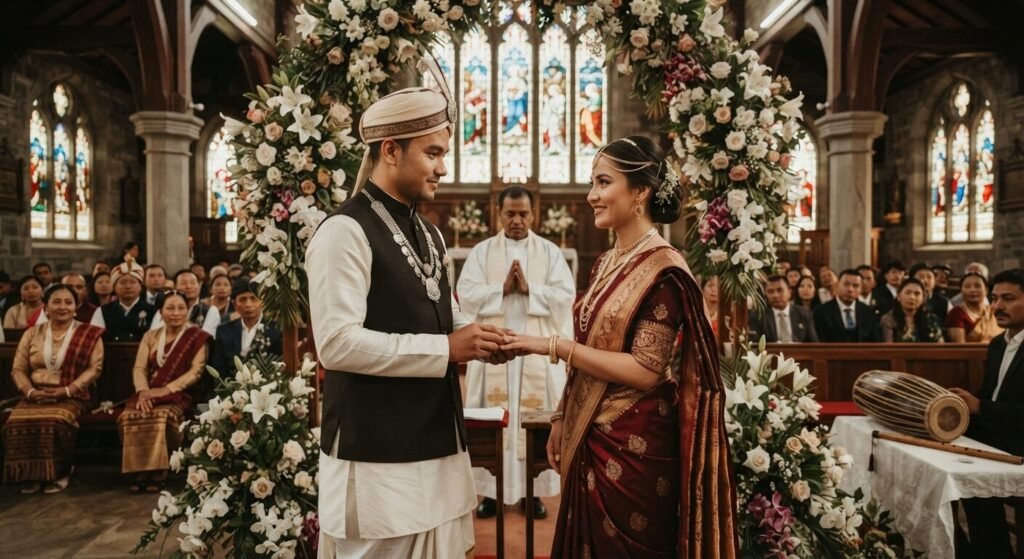
The Khasi wedding ceremony itself is usually understated: a civil or church-blessed union in which the couple exchanges rings, or in a simpler traditional form known as Ka Lamdoh, no rings at all — the marriage recognised through mutual consent and the presence of both families rather than an elaborate rite. Where a church blessing is part of the wedding, we cover it the way we would any solemn ceremony — respectful distance, no flash, minimal movement — and where the ceremony is a home-based civil exchange, we shoot it with the same quiet attention.
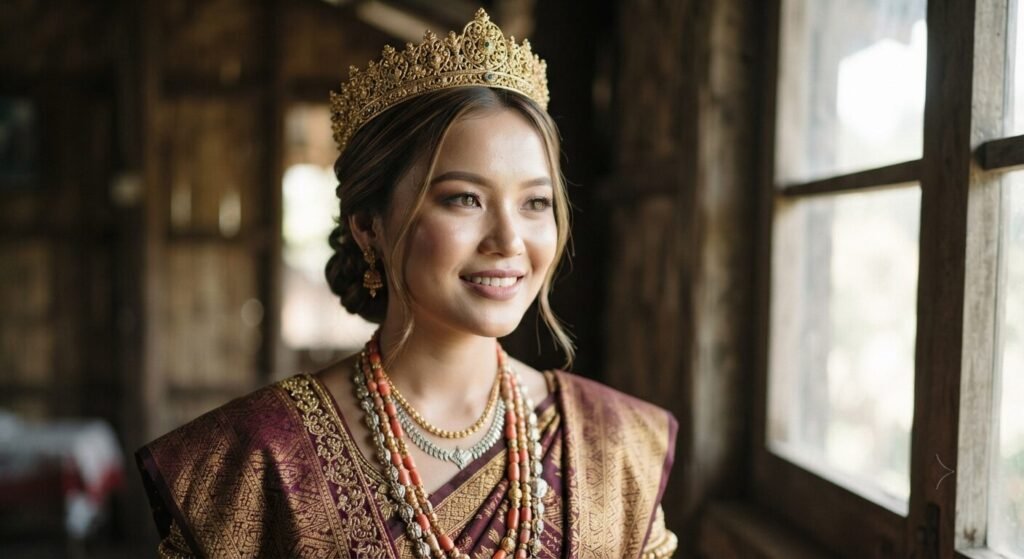
Whatever form the ceremony itself takes, the bride’s traditional outfit is a genuine photographic centrepiece: a Dhara or Jainsem, an intricately layered garment built from several individual pieces to create a distinctive cylindrical silhouette, paired with a gold or silver crown fitted with a peak at the back. Much of this bridal attire and jewellery is traditionally gifted by the groom’s family. We treat the dressing and the crown itself as a dedicated portrait and detail sequence, since the craftsmanship involved rarely gets the attention it deserves in generic wedding coverage.
Traditional Attire and the Bridal Crown
Moving to the Bride's Home
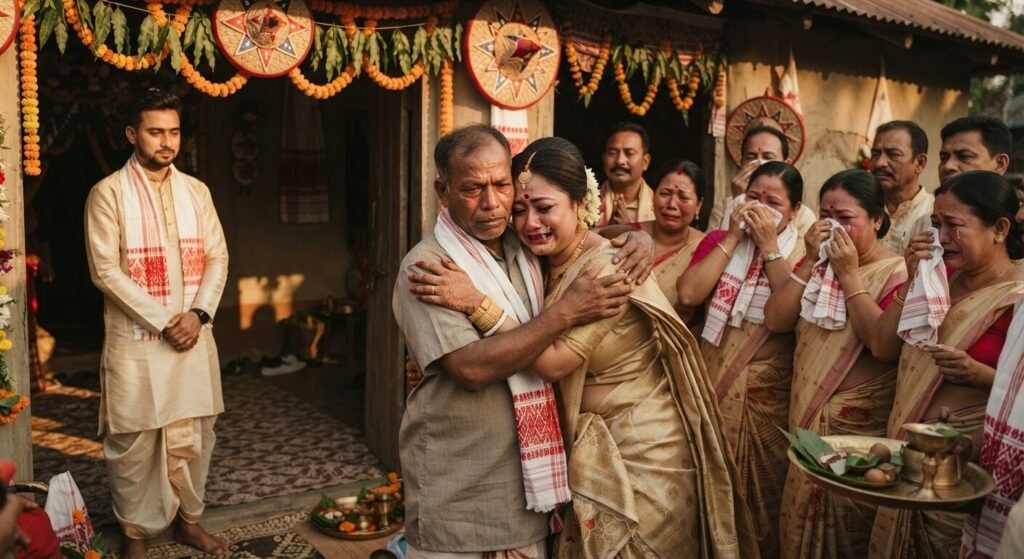
The wedding is considered fully sealed not at the ceremony itself, but at the moment the groom formally moves into the bride’s ancestral household — the clearest expression of the matrilineal structure that defines Khasi and Garo family life. Where families choose to mark or photograph this transition, we treat it as a genuinely significant moment rather than a logistical afterthought, since it carries more cultural weight in this tradition than almost anything else in the wedding.
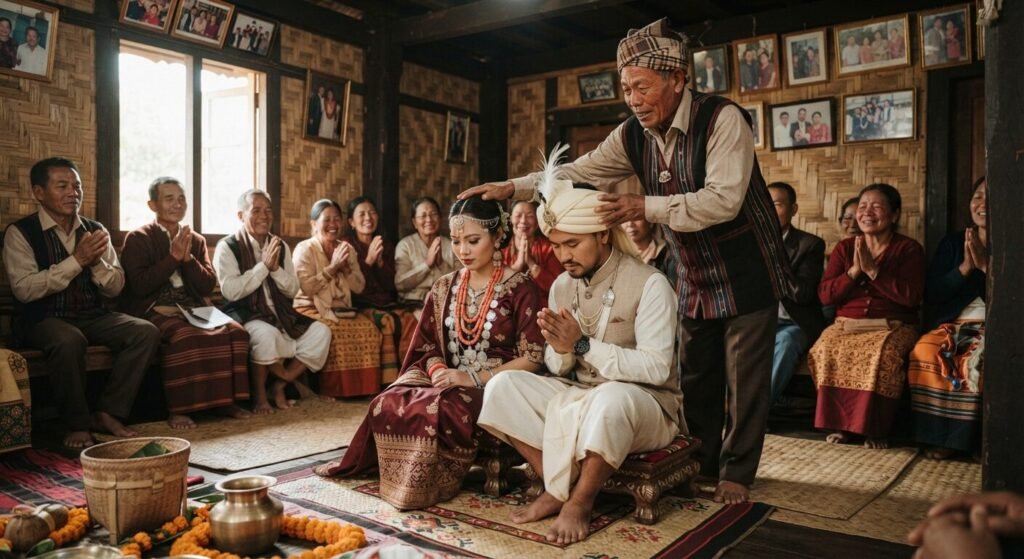
Across both Khasi and Garo tradition, maternal uncles hold a formal, respected role in family and property matters, and their blessing or presence at key moments of the wedding is treated with particular significance — in Garo families, this can extend to the Nokrom system, where a son-in-law may be formally recognised within the family structure. We make a point of identifying and photographing these figures specifically, rather than treating them as generic wedding guests, since their role carries real cultural meaning within the family.
Family Blessings and the Maternal Uncle's Role
Our Approach to Meghalaya Wedding Photography
A Khasi or Garo wedding calls for a different kind of attention than the ritual-dense weddings common elsewhere in India:
- Cultural accuracy over assumption — we don’t apply a generic North or South Indian wedding template to a Meghalaya wedding; the structure, pacing, and significance of each moment are genuinely different, and our coverage reflects that.
- A quiet, dignified style — in keeping with the understated character of Khasi and Garo ceremonies, we favour restrained, observational photography over a more theatrical approach.
- Attention to matrilineal significance — moments like the groom joining the bride’s household and the maternal uncle’s role are treated as culturally central, not incidental.
- Craftsmanship-focused detail work — the Jainsem or Dhara and the bridal crown receive dedicated portrait and detail coverage, given the skill involved in both.
- Destination-ready — for Khasi and Garo families hosting weddings outside Meghalaya, including in Bangalore, we bring the same cultural attention wherever the wedding takes place.
What Couples Say
Frequently Asked Questions
Are Meghalaya weddings very different from typical Indian weddings?
Yes, significantly. Khasi and Garo weddings are shaped by a matrilineal social structure, tend to be far less ritual-heavy than Hindu weddings elsewhere in India, and are often civil or church ceremonies rather than a multi-day sequence of pujas. We build our coverage plan around your family’s actual customs rather than assuming a generic format.
Do you photograph church weddings as well as traditional ceremonies?
Yes, many Khasi families include a church blessing as part of the wedding, and we cover it with the same respectful, minimal-intervention approach we bring to any solemn ceremony.
Will you understand and correctly photograph Garo customs like Nokrom?
Yes, we confirm your family’s specific customs in advance, including community-specific structures like the Garo Nokrom system, so our coverage reflects what’s actually significant to your family.
Do you travel to Meghalaya for weddings?
Yes, we regularly travel to Shillong and across the Khasi and Garo Hills, and we plan our logistics around the specific venues and timing your family has chosen.
Do you photograph Meghalaya weddings hosted outside the state?
Yes — for Khasi and Garo families hosting weddings in cities like Bangalore, we bring the same cultural attention to detail regardless of where the wedding takes place.
Ready to Document Your Meghalaya Wedding, Thoughtfully and Accurately? Let’s Talk.