
Assam — Assamese Biya — Destination — Juran Diya to Bidai
Assam wedding photography, every ritual documented
From the Juran Diya to the Bidai, candid coverage of Assamese wedding traditions, in Guwahati, across Assam, or wherever your wedding takes you.
Contact Us →Every ritual, covered
An Assamese wedding, known locally as a Biya, is a subtler kind of grand — mango leaves tied over doorways to ward off negativity, the sound of conch shells and women’s uruli rolling through a courtyard, a mother-in-law pouring oil into her daughter-in-law’s hair three times before applying sindoor with her own hands. At Yatish Photography, we photograph Assamese weddings, whether hosted in Guwahati, a family home in Upper Assam, or as a destination wedding in Bangalore, with the quiet, observant approach these ceremonies deserve.
An Assamese wedding is elegant rather than loud, and its rituals reward a photographer who knows what to actually look for — the specific moment sindoor is applied by the groom’s mother rather than the groom himself, the exact instant women aren’t allowed to look back on the walk home from the river. We build our coverage around those specifics.
Every Ritual of an Assamese Wedding
Juran Diya — The Groom's Family Arrives With Gifts
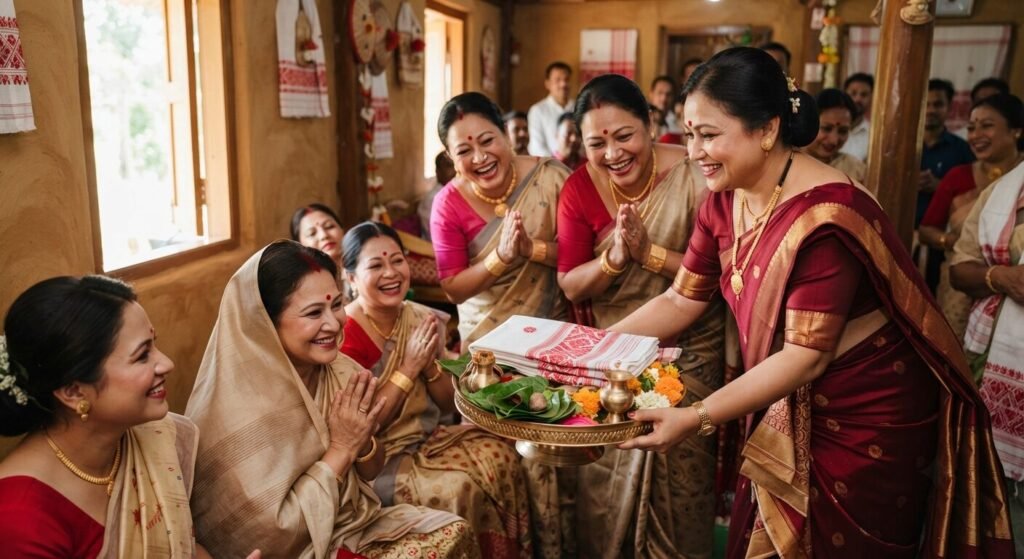
The Juran Diya, usually held a day or two before the wedding, sees the groom’s mother and female relatives visit the bride’s home carrying gifts of paan-tamul (betel leaves and nuts) and a gamosa, the traditional white-and-red Assamese cloth, presented on a brass tray called a xorai. It’s often described as the Assamese equivalent of a bridal shower, and we photograph it with attention to the exchange itself — the xorai being presented, the bride receiving her gifts — as well as the warmth between the two families meeting this closely for the first time.
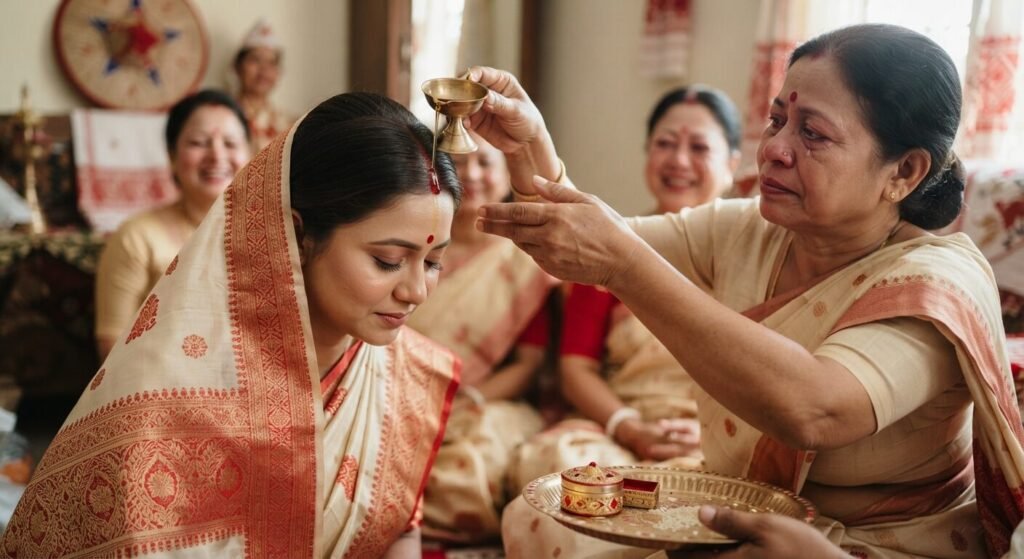
Following directly from the Juran, the Tel Diya sees the groom’s mother place a ring and betel nut on the bride’s hair parting, pour oil over it three times, and then apply sindoor — a detail that surprises many outside the community, since in most Hindu traditions it’s the groom, not his mother, who applies sindoor for the first time. This ritual carries real emotional and cultural weight, and we treat it as one of the defining images of an Assamese wedding, framing it closely to capture both the ritual gesture and the expressions of the two women performing it together.
Tel Diya — Oil, Sindoor, and a Distinctly Assamese Detail
Pani Tola — Gathering Sacred Water
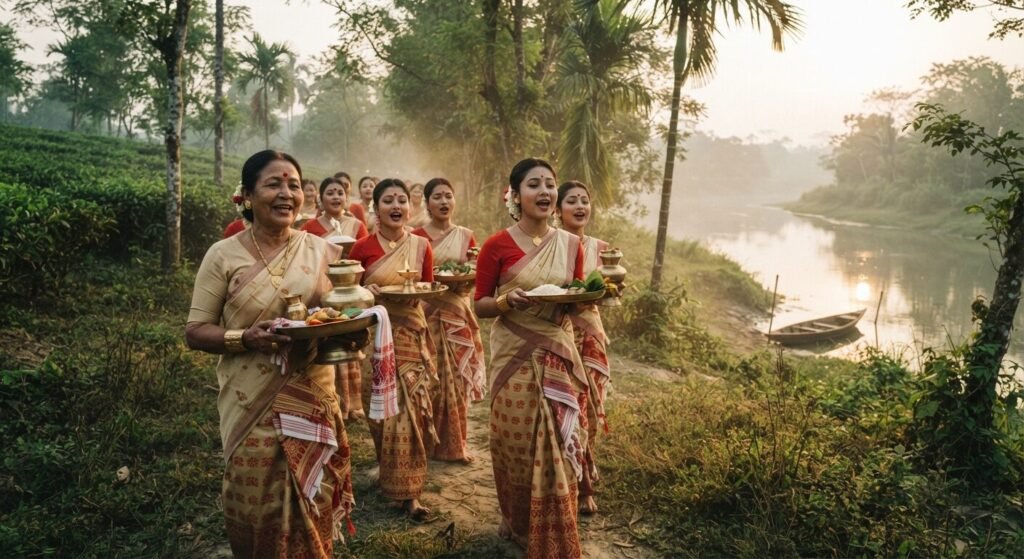
In the Pani Tola ceremony, the mothers of the bride and groom walk to a nearby pond or river to gather water for the couple’s ceremonial bath, accompanied by other women singing Biya Naam folk songs and carrying a lit diya, rice, betel nut, a coin, and a knife on a brass stand. A strict custom governs the return journey: the group must walk back without looking behind them, believed to protect the collected water’s blessing. We shoot this as an outdoor procession, following the group to and from the water, and take care not to interrupt the no-looking-back custom with directions or repeated takes.
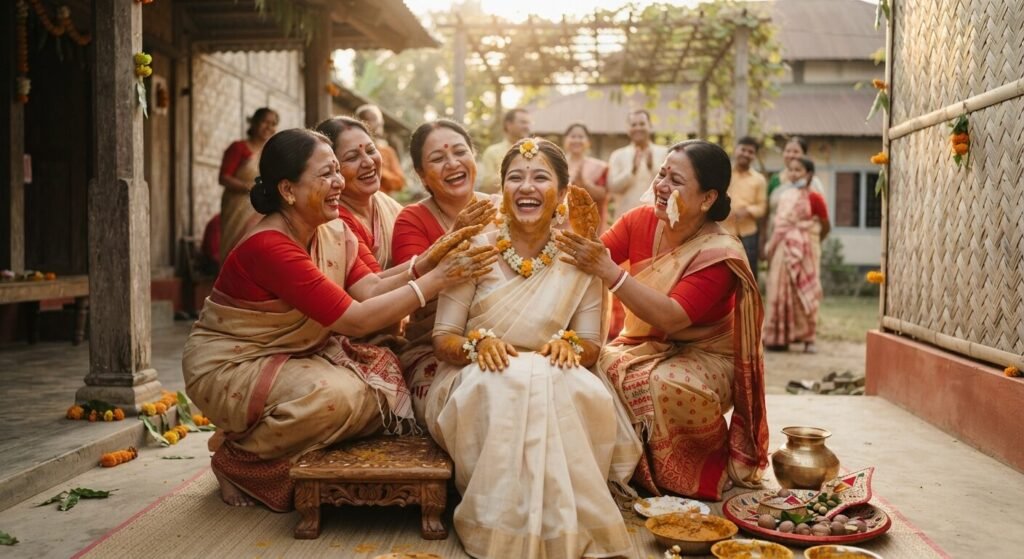
Using the water gathered during Pani Tola, the Nuoni ceremony sees the mothers of the bride and groom prepare a paste of turmeric, urad dal, oil, and curd known as maah-halodhi, applied to the couple’s face and arms by family members before they bathe, in a ritual believed to bring luck and prosperity. It’s a warm, hands-on moment similar in spirit to a Haldi ceremony elsewhere in India, and we shoot it candidly, favouring genuine reactions over posed application shots.
Nuoni — The Turmeric Bath
Daiyan Diya — Curd Shared Between Two Homes
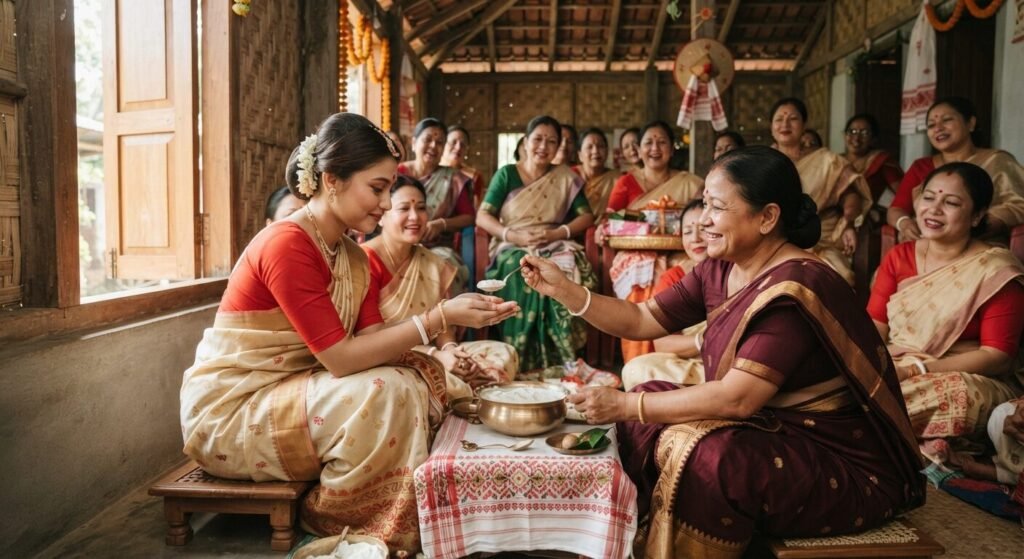
On the morning of the wedding, the Daiyan Diya sees curd sent from the groom’s house to the bride’s, of which she eats a portion before the rest is sent back for the groom to share — a small gesture symbolising the two households coming together even before the ceremony itself begins. It’s a quick, easily overlooked ritual, and we make a point of covering it when timing allows, since families often appreciate having even the smaller customs documented.
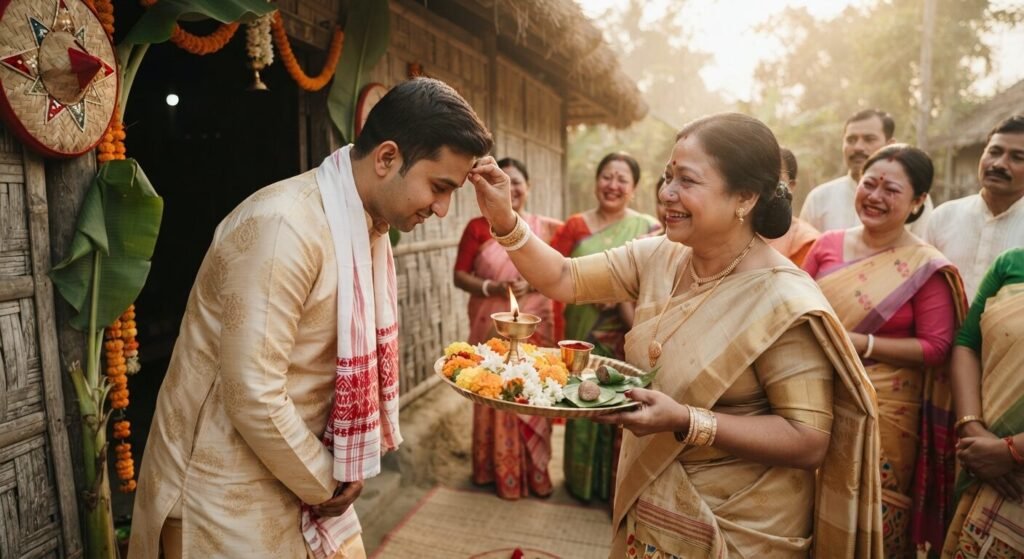
Upon the groom’s arrival at the bride’s home or venue, the bride’s mother welcomes him in the Bor Borani ceremony, presenting a xorai filled with tamul-paan, water, and flowers, performing an aarti with a lit diya circled around him, and applying a tilak to his forehead before he’s allowed to proceed. This ritual sets the tone for the ceremony that follows, and we photograph it with close, composed framing on the aarti and tilak, since the sequence happens quickly and deserves to be captured clearly rather than in a single rushed wide shot.
Bor Borani — Welcoming the Groom
Biya — The Havan and Saptapadi Under the Biya Ghar
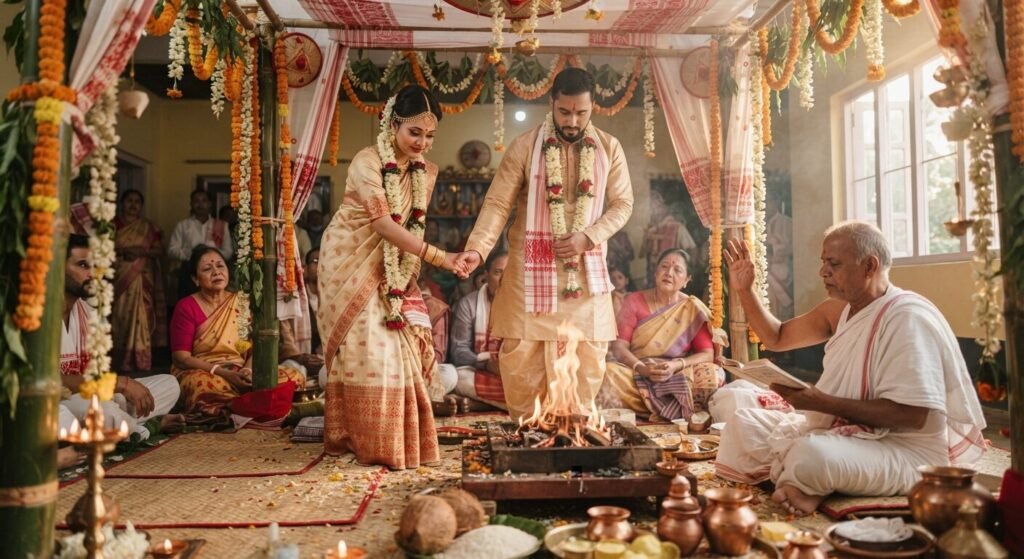
The main wedding ceremony takes place under a decorated canopy known as the Biya Ghar, where a Vaishnavite priest conducts the rites according to the Ek Sarana Naam Dharma tradition, chanting Vedic mantras as the couple, garlanded with flowers and basil leaves, takes seven steps — the Saptapadi — around the sacred Havan fire. This is the ceremonial heart of the wedding, and we photograph it with the same restraint we bring to every sacred fire ceremony we cover — no flash, minimal repositioning, and a clear individual record of each of the seven rounds.
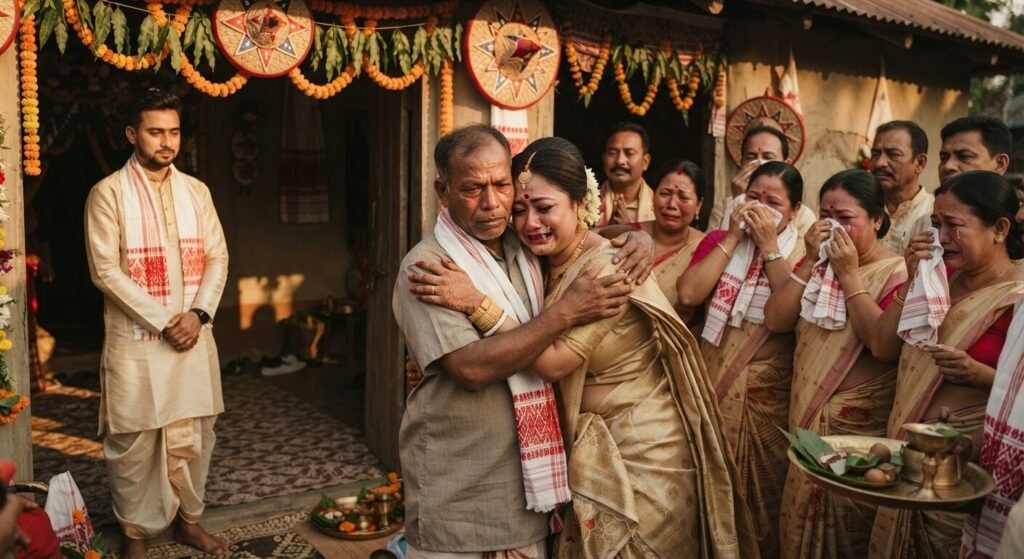
The Bidai marks the bride’s emotional departure from her family home as she leaves to begin her married life, a moment of visible grief and love that runs through Indian wedding traditions regardless of region. We photograph the Bidai exactly as we do across every wedding we cover — quietly, without direction or repeated takes, documenting the goodbye as it genuinely happens.
Bidai — The Bride's Farewell
Ashtamangala — The Eighth-Day Return
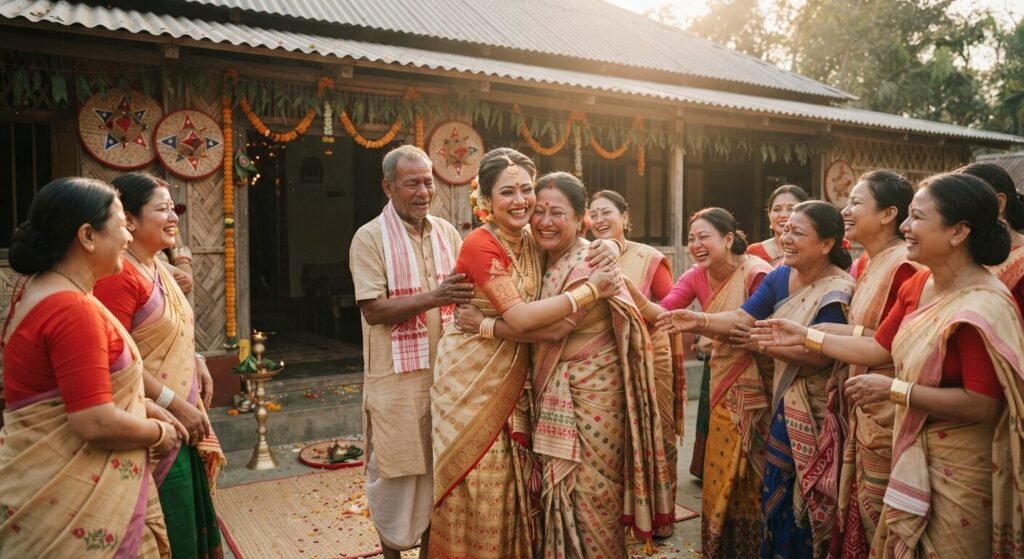
Roughly eight days after the wedding, the bride makes her first return visit to her parental home in a ceremony known as Ashtamangala, marking a formal, celebratory close to the wedding proceedings with a small family gathering. We recommend including this in your coverage plan where possible, since it closes out the story that began with the Juran Diya and is often a warmer, more relaxed occasion to photograph than the wedding day itself.
Our Approach to Assam Wedding Photography
Assamese weddings are quieter and more understated than many other Indian wedding traditions, and our coverage is built to match that character:
- Attention to distinctly Assamese detail — the mother-in-law’s role in the Tel Diya sindoor ritual and the Pani Tola water-gathering custom are treated as defining moments, not incidental background.
- Respect for ritual protocol — customs like not looking back during Pani Tola are followed by our team as well, so our presence never interferes with how the ritual is meant to unfold.
- A quiet, observational style — in keeping with the general subtlety of Assamese wedding customs, we favour candid, unobtrusive coverage over a more theatrical approach.
- Complete ritual documentation — from the smaller Daiyan Diya to the eighth-day Ashtamangala, we build a shot list around the full arc of the wedding rather than only the main ceremony day.
- Destination-ready — for Assamese families hosting weddings outside the state, including in Bangalore, we bring the same cultural attention to detail wherever the wedding takes place.
What Couples Say
Frequently Asked Questions
Is it true the groom's mother applies sindoor instead of the groom?
Yes, in the Tel Diya ceremony, it’s traditionally the groom’s mother who applies the first sindoor to the bride, a detail specific to Assamese weddings that we plan our coverage around in advance.
Will your team respect customs like not looking back during Pani Tola?
Yes, we follow the same protocols the wedding party does, so our coverage never interferes with how a ritual is meant to be performed.
Do you travel to Assam for weddings?
Yes, we regularly travel for weddings in Guwahati and across Assam, and we plan our logistics around locations that may include a nearby river or pond for rituals like Pani Tola.
Do you photograph Assamese weddings hosted outside Assam?
Yes — many Assamese families now host weddings in cities like Bangalore, and we bring the same attention to regional ritual detail regardless of where the wedding takes place.
How soon after the wedding do we receive our photos?
Edited previews are typically shared within a few days, with the full gallery delivered on a timeline confirmed in advance based on the scope of coverage.
Ready to Document Your Assamese Wedding, Ritual by Ritual? Let’s Talk.