
Lucknow — Varanasi — Destination — Roka to Vidai
Uttar Pradesh wedding photography, every ritual documented
From the Roka to the Vidai, candid coverage of Awadhi and Purvanchal wedding traditions, in Uttar Pradesh or wherever your wedding takes you.
Contact Us →Every ritual, covered
A Uttar Pradesh wedding carries a particular warmth — winter weddings thick with the smell of gajar ka halwa and shahi paneer, a groom’s sehra swaying as he’s dressed by his family, a father washing his daughter’s and new son-in-law’s feet as though they were Lakshmi and Vishnu themselves. At Yatish Photography, we photograph UP weddings, from Awadhi households in Lucknow to Purvanchal and Bhojpuri-speaking families further east, whether hosted in the state itself or as a destination wedding in Bangalore, with attention to the rituals that are genuinely specific to the region rather than a generic North Indian template.
Uttar Pradesh is a large and culturally varied state, and customs shift meaningfully between its regions — a Purvanchal family observing Matkor will have a different pre-wedding rhythm than an Awadhi family in Lucknow. We confirm your family’s specific customs in advance so our coverage matches the wedding you’re actually having.
Every Ritual of a Uttar Pradesh Wedding
Roka — Announcing the Match
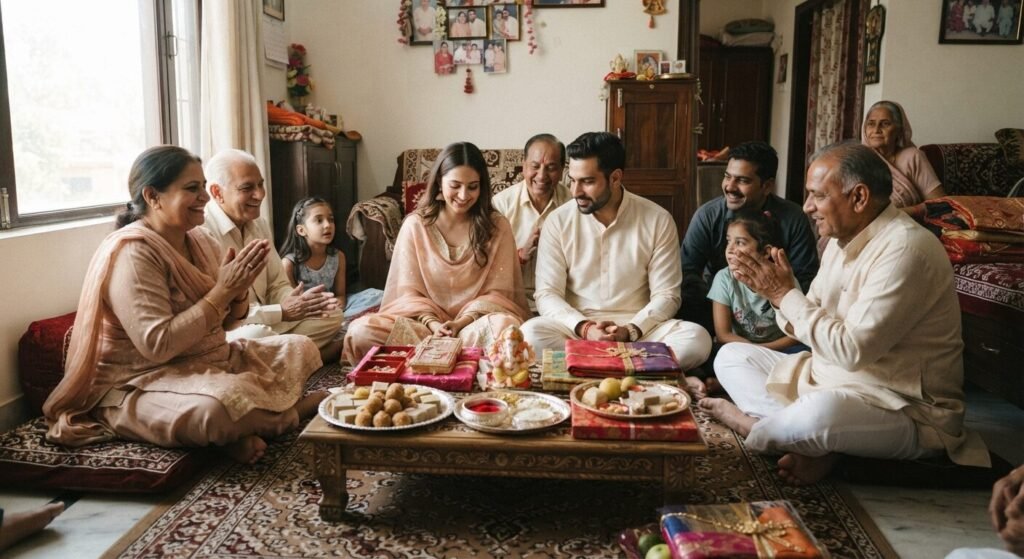
The Roka, from the Hindi word “rok” meaning to stop, is the ceremony where the families formally announce that the search for a match has ended, exchanging sweets, gifts, and cash as they confirm the alliance. It’s usually a warm, unhurried gathering, and we photograph it that way — candid, close, and observational, focused on the actual moment of agreement rather than a staged group photo.
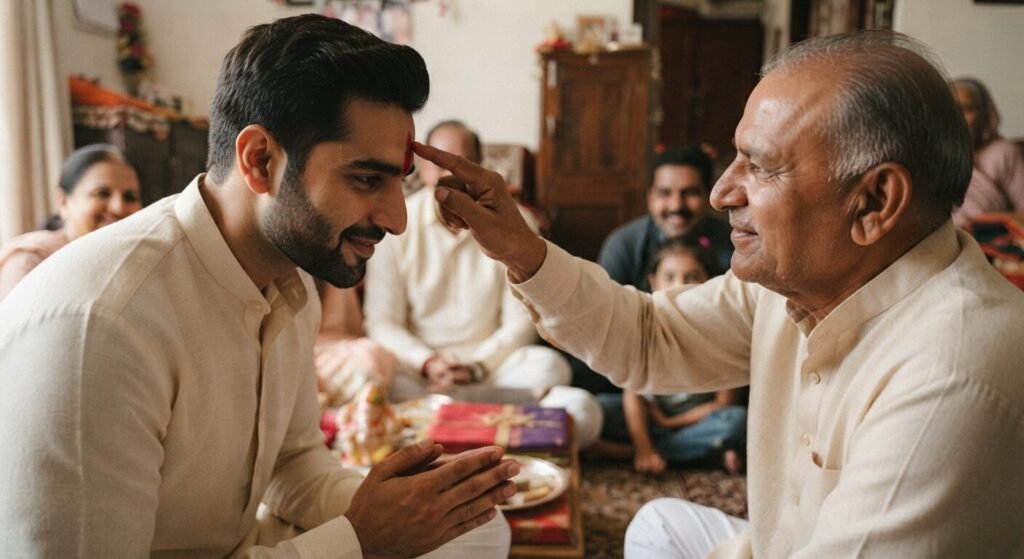
In the Tilak ceremony, the bride’s family visits the groom’s home to formally bless him, applying a mark of vermilion or sandalwood paste on his forehead as a sign of acceptance into the family, followed by an exchange of gifts between both sides. We shoot the Tilak with close attention to the blessing itself and the groom’s expression as he receives it, alongside the wider family gathering around him.
Tilak — The Formal Blessing
Matkor — A Purvanchal Tradition Rooted in the Earth
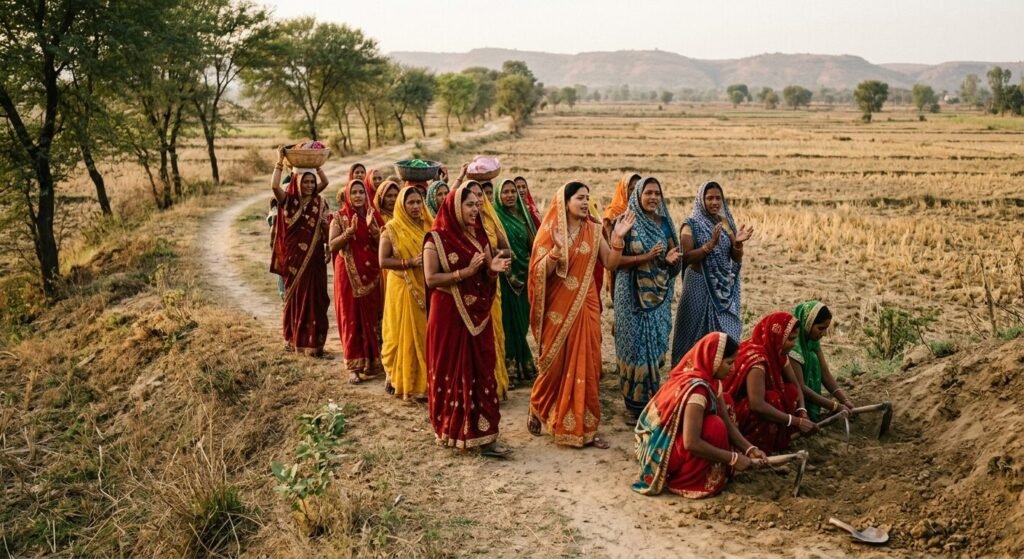
Among Purvanchal and Bhojpuri-speaking families in eastern Uttar Pradesh, the Matkor is a distinctive pre-wedding ritual in which women from the family go to dig fresh earth from a specific spot, traditionally used afterward in the wedding’s mandap and puja rituals, accompanied by folk songs sung along the way. It’s a genuinely regional custom, often overlooked by photographers unfamiliar with eastern UP traditions, and we make a point of covering it specifically when a family observes it — the procession, the digging itself, and the songs sung throughout.
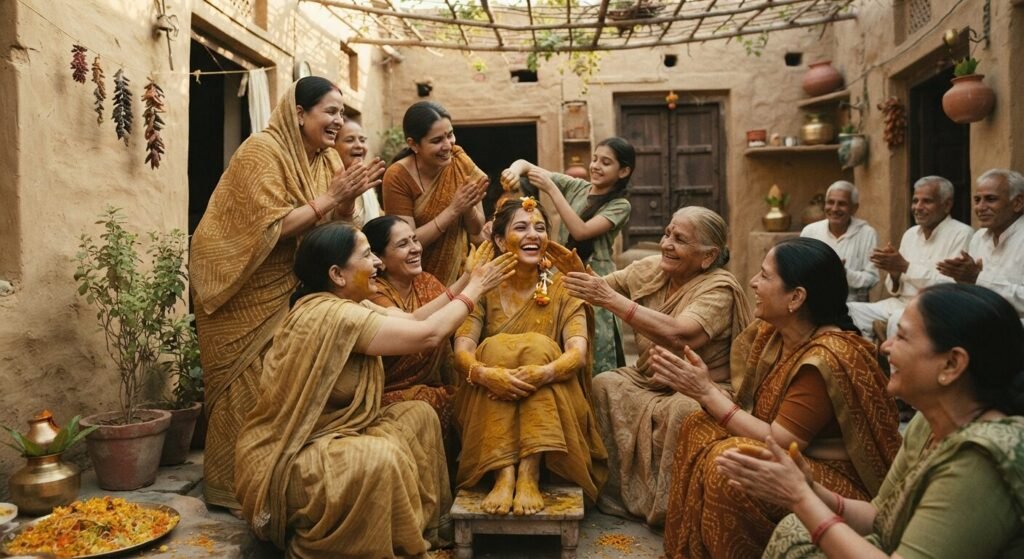
The Haldi ceremony involves applying a turmeric paste to the bride and groom at their respective homes, intended to bless them with a glowing complexion and good health ahead of the wedding. It’s a lively, informal event in most UP households, often accompanied by music, and we shoot it candidly — favouring genuine reactions over posed application shots.
Haldi — Turmeric and Blessings
Mehendi and Sangeet — Two Nights of Music
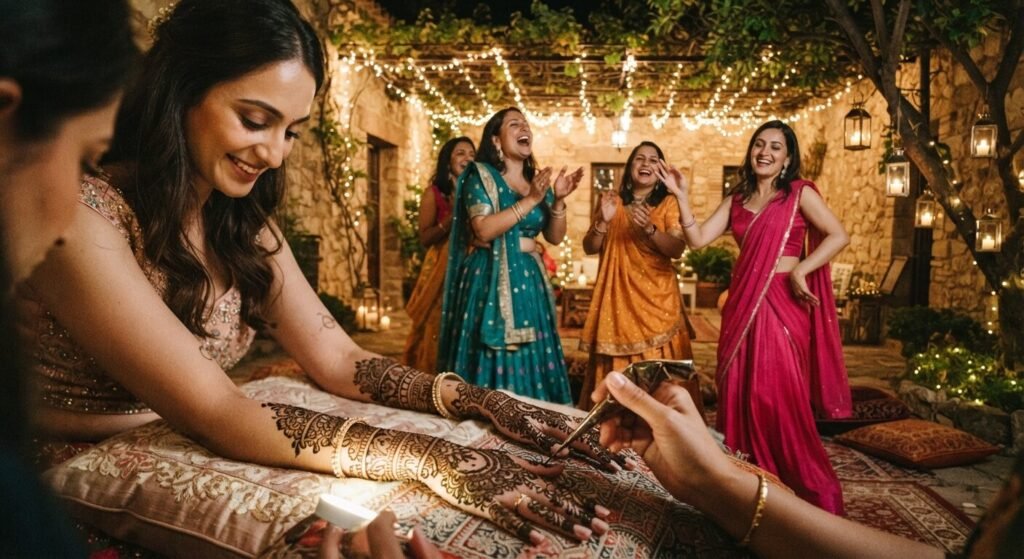
The Mehendi ceremony brings intricate henna patterns to the bride’s hands and feet, while the Sangeet, held on a separate night, is a full evening of music and dance where both families showcase their performances, often centred around traditional folk songs known locally as Sneha. Between the detail of the henna work and the energy of the Sangeet performances, these two nights offer some of the richest photographic material in the entire wedding, and we cover both with a mix of macro detail and wide, dynamic crowd shots.
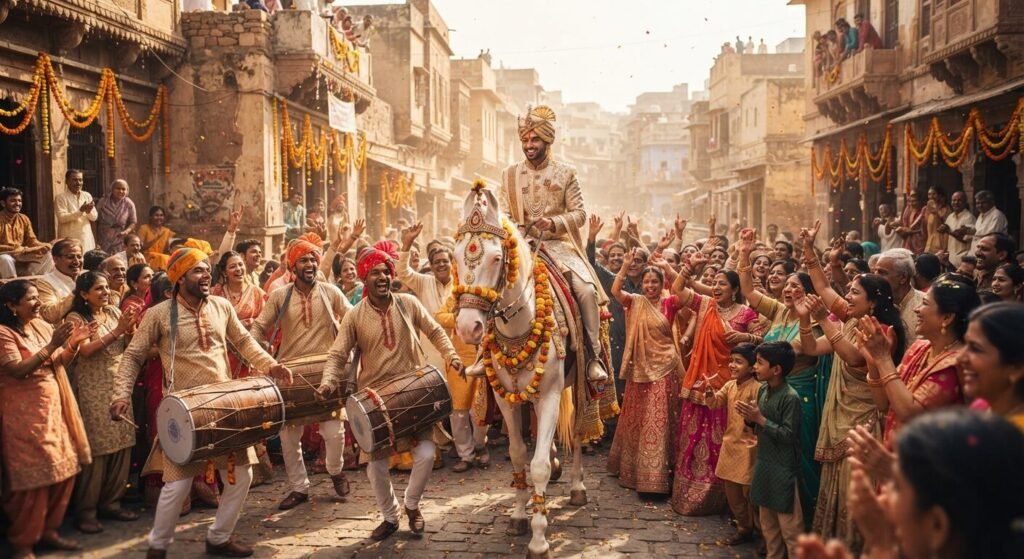
Before departing for the wedding venue, the groom’s relatives tie a sehra — a decorative veil of flowers or beads — onto his turban in the Sehra Bandi ceremony, symbolising the family’s blessings as he sets out to be married. This is followed by the Baraat, his procession to the venue, traditionally on a decorated horse though increasingly by car, accompanied by dancing family and a live band. We photograph the Sehra Bandi as a close, quiet moment at home, then shift to wide, high-energy coverage for the Baraat procession itself.
Sehra Bandi and Baraat — Dressing and Departing the Groom
Vivaah-Havan and Saptapadi — The Sacred Vows, With a UP-Specific Detail
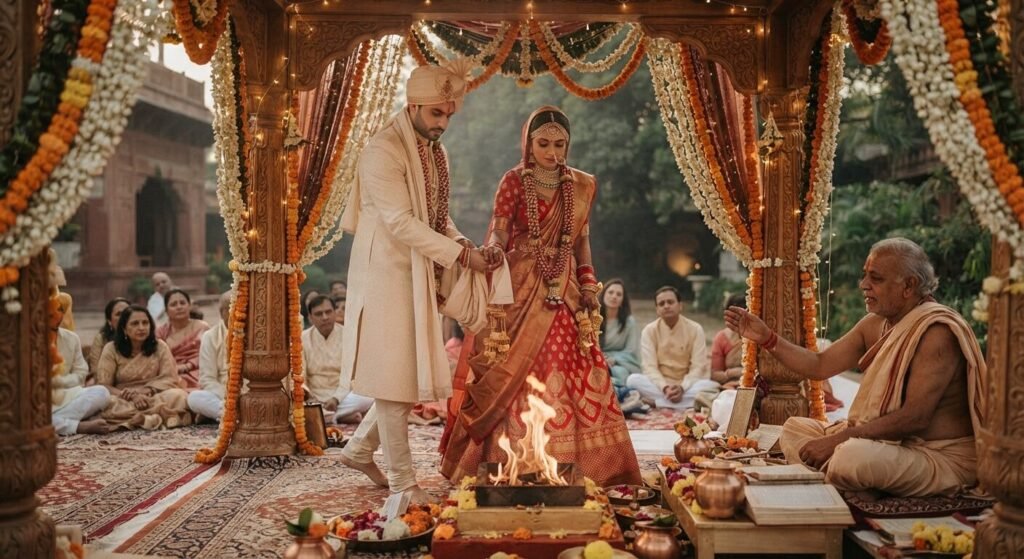
At the heart of the wedding is the Vivaah-Havan, where the sacred fire is lit and the couple takes their Saptapadi — seven rounds around the fire, each representing a specific vow. In a detail distinctive to Uttar Pradesh weddings, after the very first phera, the bride’s father performs a ritual washing of the bride and groom’s feet, since at this moment they’re considered to represent Devi Lakshmi and Lord Vishnu. We photograph this sequence with the same restraint we bring to every sacred fire ceremony we cover — no flash, minimal repositioning — while making a specific point of capturing the feet-washing moment, since it’s easy to miss without knowing to expect it.
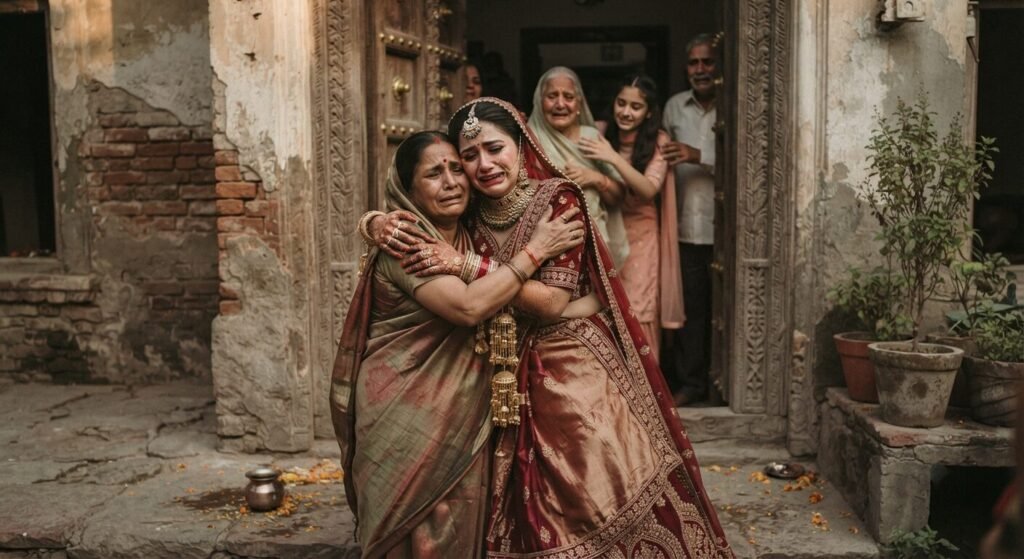
The Vidai sees the bride bid a tearful farewell to her family as she departs for her husband’s home, widely considered the most emotional moment of any Indian wedding, followed by the Griha Pravesh, where the groom’s family formally welcomes her into her new home with traditional rituals. We photograph the Vidai exactly as we do across every regional wedding we cover — quietly, without direction or repeated takes — before shifting to warmer, closer coverage as she’s welcomed at her new home.
Vidai and Griha Pravesh — Farewell and Welcome
Our Approach to Uttar Pradesh Wedding Photography
Uttar Pradesh weddings combine deep-rooted ritual with genuine regional variation, and our coverage reflects both:
- Region-specific planning — we confirm in advance whether your family follows Awadhi, Purvanchal, Bhojpuri, or other regional customs, since rituals like Matkor are specific to particular communities rather than universal across the state.
- Attention to details easy to miss — the feet-washing moment after the first phera and the temple-sourced sindoor are two specifically UP customs we plan for rather than risk missing.
- Two nights of music, covered properly — the Mehendi and Sangeet each get their own dedicated coverage rather than being treated as a single blurred event.
- Stillness where it matters — the Vivaah-Havan, Saptapadi, Sindoor Daan, and Vidai are shot quietly and respectfully, regardless of how large the wedding around them is.
- Destination-ready — for UP families hosting weddings outside the state, including in Bangalore, we bring the same attention to regional custom wherever the wedding takes place.
What Couples Say
Frequently Asked Questions
Do wedding rituals vary across different parts of Uttar Pradesh?
Yes, customs shift meaningfully between regions — Purvanchal and Bhojpuri-speaking families often observe rituals like Matkor that aren’t universal across the state, while Awadhi families in Lucknow may follow a somewhat different sequence. We confirm your family’s specific customs in advance so our coverage plan matches your actual wedding.
Will you make sure to capture the feet-washing ritual after the first phera?
Yes, this is a detail specific to Uttar Pradesh weddings, and we plan for it in advance so our team is positioned correctly when it happens.
Do you travel to Uttar Pradesh for weddings?
Yes, we regularly travel for weddings across the state, including Lucknow, Varanasi, Kanpur, and towns throughout Purvanchal.
Do you photograph Uttar Pradesh weddings hosted outside the state?
Yes — many UP families now host weddings in cities like Bangalore, and we bring the same attention to regional ritual detail regardless of where the wedding takes place.
How soon after the wedding do we receive our photos?
Edited previews are typically shared within a few days, with the full gallery delivered on a timeline confirmed in advance based on the scope of coverage.
Ready to Document Your Uttar Pradesh Wedding, Ritual by Ritual? Let’s Talk.