
Delhi — NCR — Destination — Roka to Bidai
Delhi wedding photography, every ritual documented
From the Roka to the Bidai, candid coverage of Baniya and Marwari wedding traditions, in Delhi or wherever your wedding takes you.
Contact Us →Every ritual, covered
Delhi doesn’t have one single wedding tradition — it has all of them, layered on top of each other, often within the same extended family. But among the capital’s business and trading communities, Baniya and Marwari weddings have a particular character: grand, generous, and built around rituals that quietly emphasise responsibility, prosperity, and family duty as much as celebration. At Yatish Photography, we photograph Baniya and Marwari weddings in Delhi, whether at a five-star banquet hall, a farmhouse in South Delhi, or as a destination wedding hosted in Bangalore, with an eye for both the scale these families are known for and the smaller rituals that carry real meaning underneath it.
Delhi’s high-society weddings tend to move fast, across multiple venues and often multiple days packed into a single long weekend. We plan our coverage around that reality — a shot list built for a wedding with several distinct events, not one single ceremony.
Every Ritual of a Delhi Baniya and Marwari Wedding
Roka and Mudda Tikka — Sealing the Match
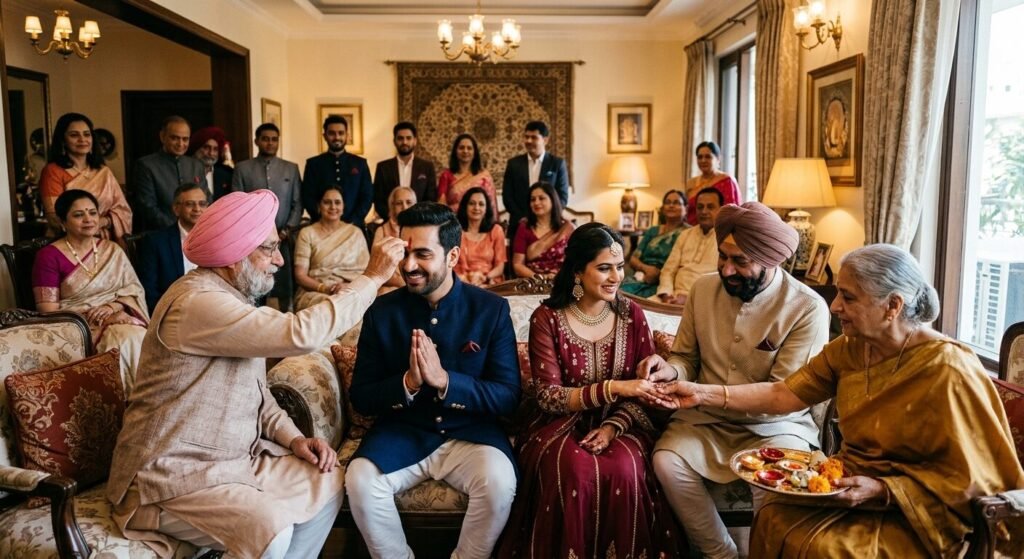
The Roka is the formal starting point, where the two families meet and agree to the marriage, with elders performing a tilak on the couple as a blessing before gifts are exchanged. In many Baniya and Marwari families, this is combined with the Mudda Tikka (engagement), where rings are exchanged between the couple in front of both families, often on the same day given how tightly Delhi wedding calendars tend to be scheduled. We photograph this combined event with attention to both formal moments — the tilak and the ring exchange — since families often want each treated as its own distinct memory rather than one blurred occasion.
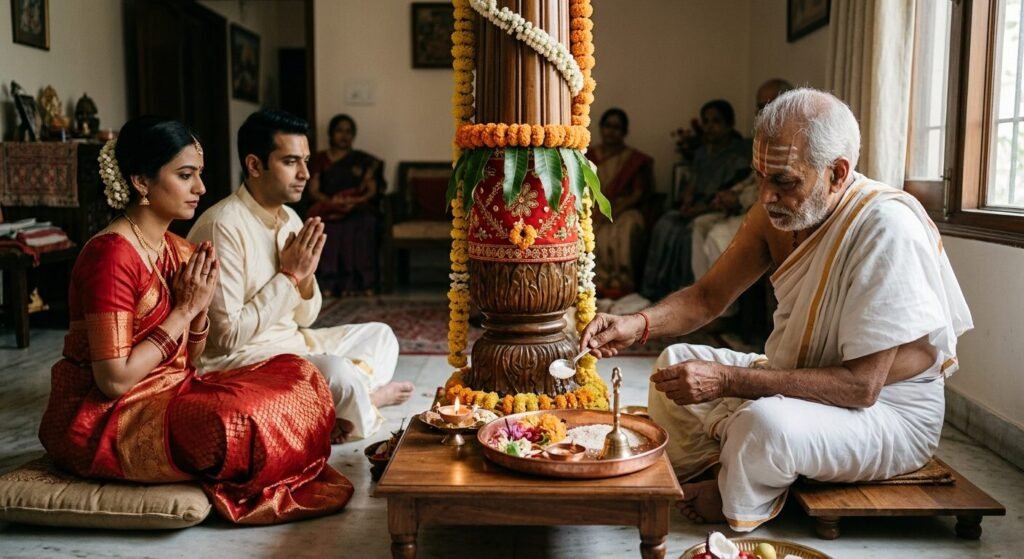
In a custom distinctive to Marwari households, the Thamb Pooja is performed by a priest at the pillars of the bride’s home, symbolically blessing the pillars as a sign of the strength and permanence expected of the marriage itself. It’s a brief, quiet ritual, easy to overlook amid the scale of everything else happening around a Delhi wedding, and we make a specific point of covering it, since it’s one of the details that marks a wedding as genuinely Marwari rather than generically North Indian.
Thamb Pooja — A Tradition Unique to Marwari Weddings
Mehndi — Henna, and Occasionally the Groom Too
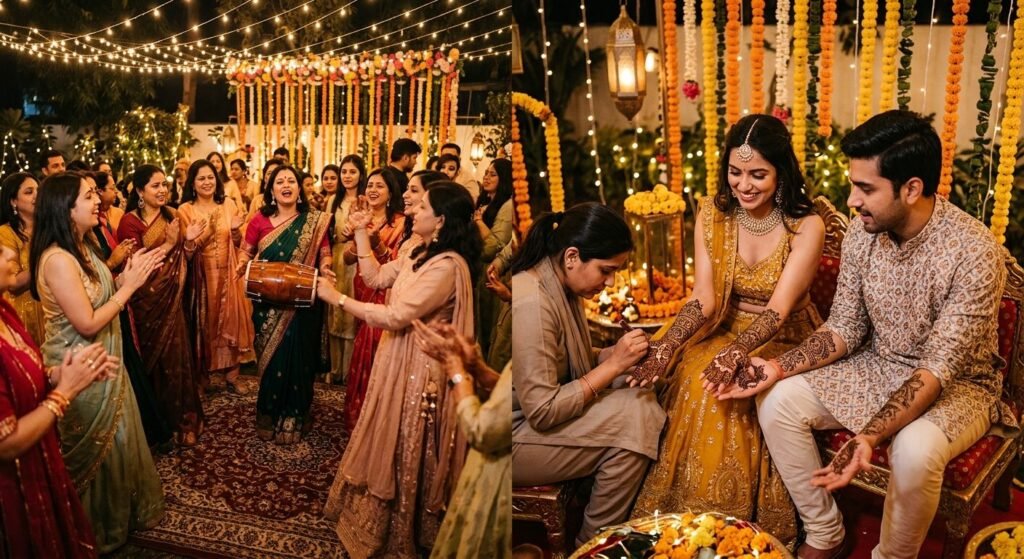
The Mehndi ceremony brings intricate henna designs to the bride’s hands and feet, accompanied by music and dancing from the women of the family — and in a detail that surprises many outside the community, Baniya and Marwari grooms often have mehndi applied to their own hands as well, a custom less common elsewhere in North India. We shoot this with both the bride’s and groom’s mehndi treated as genuine photographic moments, alongside the wider candid coverage of the singing and dancing happening around them.
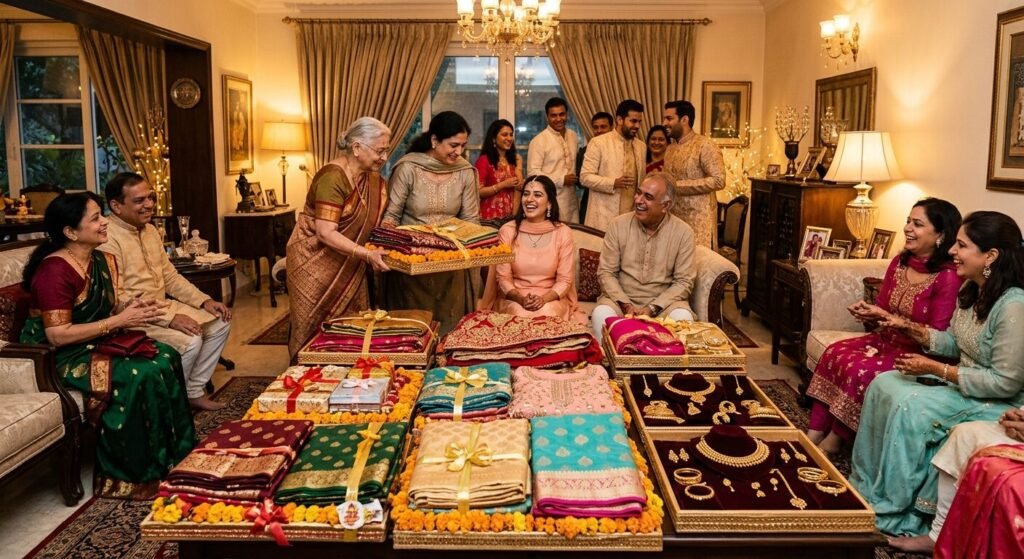
In the Palla Dastoor, the groom’s family presents the bride with her wedding attire and jewellery — in many Marwari families, the bride is expected to wear only what’s given to her this way rather than clothing of her own choosing. Around the same time, the Mahira Dastoor sees the bride’s maternal uncle and aunt (Mama and Mami) arrive with their own blessings, gifts, and token money, a ritual considered especially significant in Marwari tradition. We treat both as dedicated styling and detail shoots — the trousseau itself, the specific jewellery pieces, and the warmth of the Mama-Mami’s arrival — since these are often reused for wedding websites and family albums well beyond the event itself.
Palla Dastoor and Mahira Dastoor — Gifts From Both Sides
Sangeet and Mehfil — The Capital's Big Night
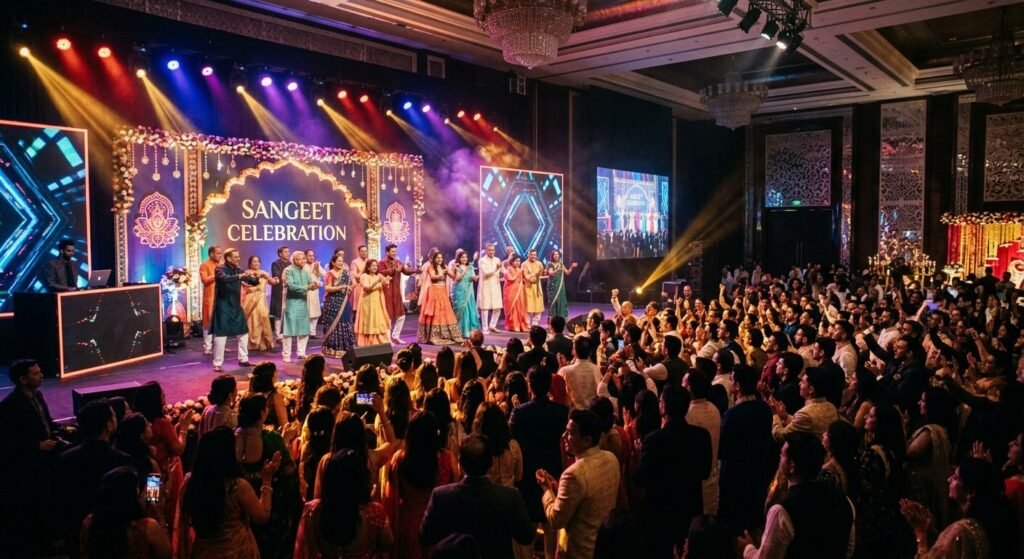
The Sangeet, sometimes referred to as Mehfil in more traditional Baniya households, is typically the most elaborate single event of a Delhi wedding — choreographed family performances, professional stage production, and a scale that reflects the city’s reputation for grand celebrations. We cover the Sangeet with full cinematic coverage, multiple camera angles for entrances, and attention to the crowd’s energy as much as the performers on stage, since Delhi Sangeets are as much a social event as a wedding ritual.
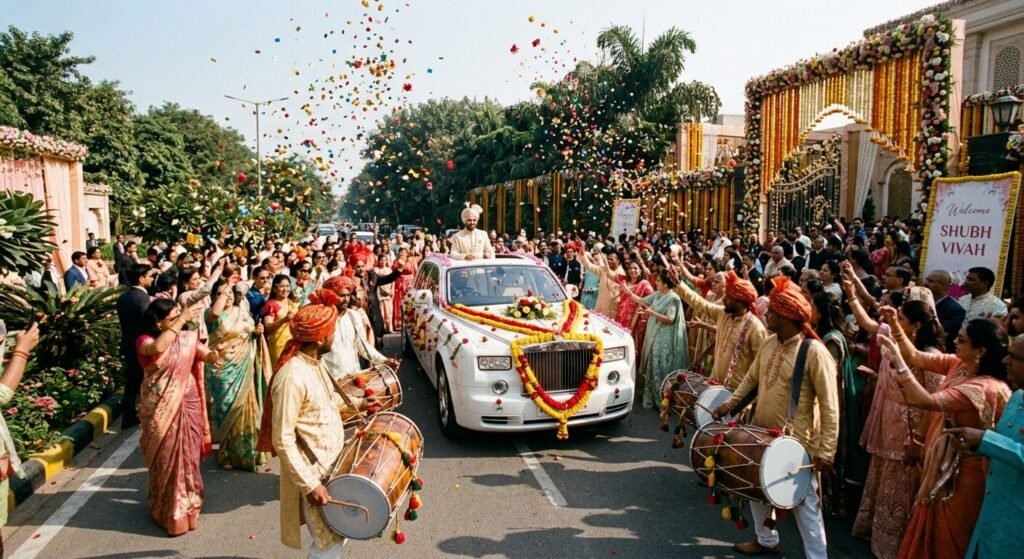
The groom’s Baraat, once traditionally arriving on a decorated horse, is now just as commonly a fully decorated luxury car procession in Delhi’s high-society weddings, accompanied by dhol players and dancing relatives making a lively entrance at the venue. We cover the Baraat with wide, high-energy shots capturing the scale of the procession, then move to closer framing as the groom is welcomed by the bride’s family at the entrance.
Baraat — A Grand Arrival
Kangan Khilai — A Playful Wedding Game
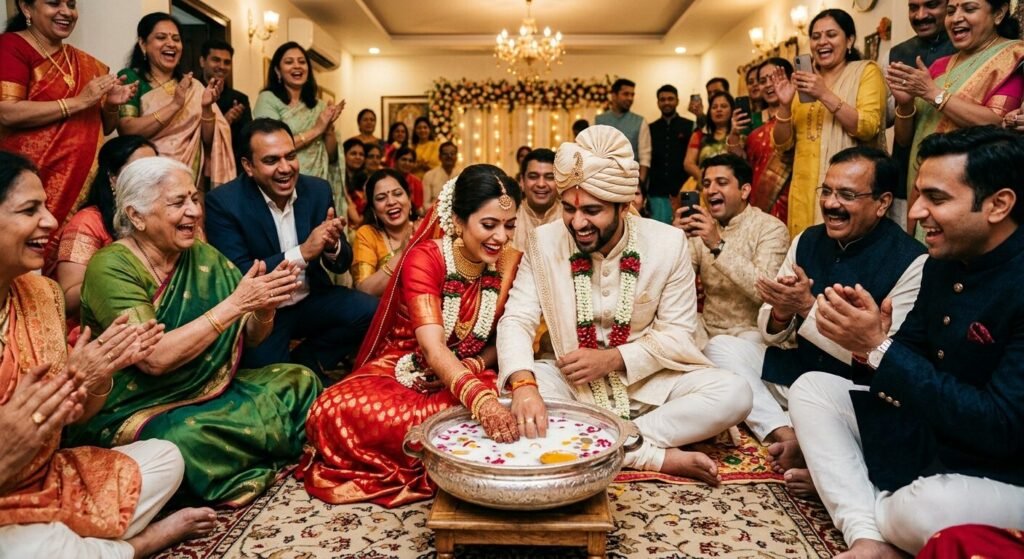
A widely loved moment in Baniya weddings, the Kangan Khilai (or Kangana ceremony) involves the newly married couple competing in a game to find a ring or coin hidden in a bowl of milk or water, believed to indicate who will hold the upper hand in the marriage — all in good humour, with both families cheering loudly from the sidelines. It’s one of the most genuinely fun, unscripted parts of the wedding, and we shoot it candidly, keeping the frame wide enough to capture the reactions of the crowd around the couple as much as the couple themselves.
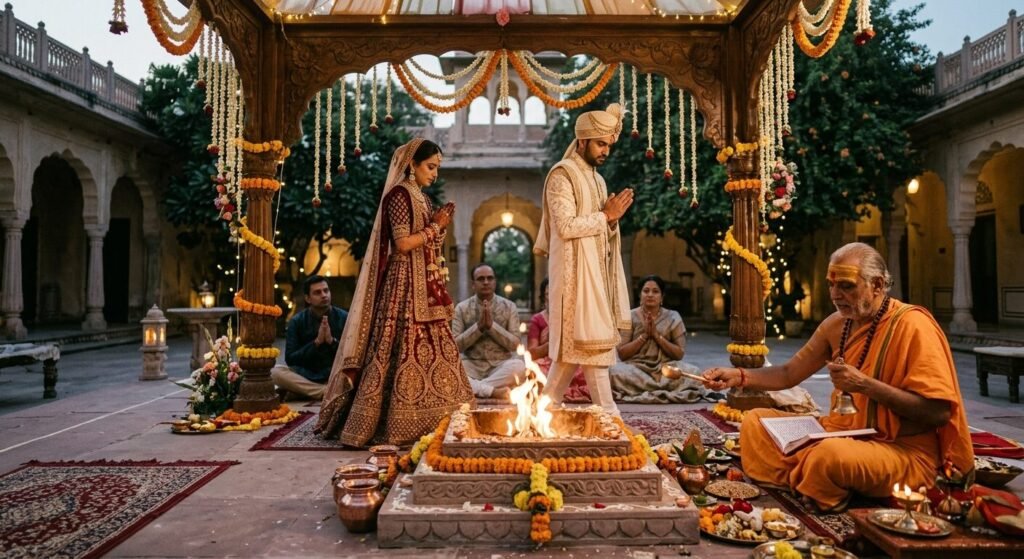
The couple takes seven rounds around the sacred fire in the Saat Phere, each representing a specific vow, after which the groom applies sindoor to the bride’s forehead and ties a mangalsutra around her neck, formally marking her as married. We photograph this sequence with the same restraint we bring to every sacred fire ceremony we cover — no flash, minimal repositioning, and a clear individual record of each phera and each of the two final rituals.
Pheras and Sindoor Daan — The Sacred Vows
Aanjhala Bharaai — A Distinctly Marwari Custom
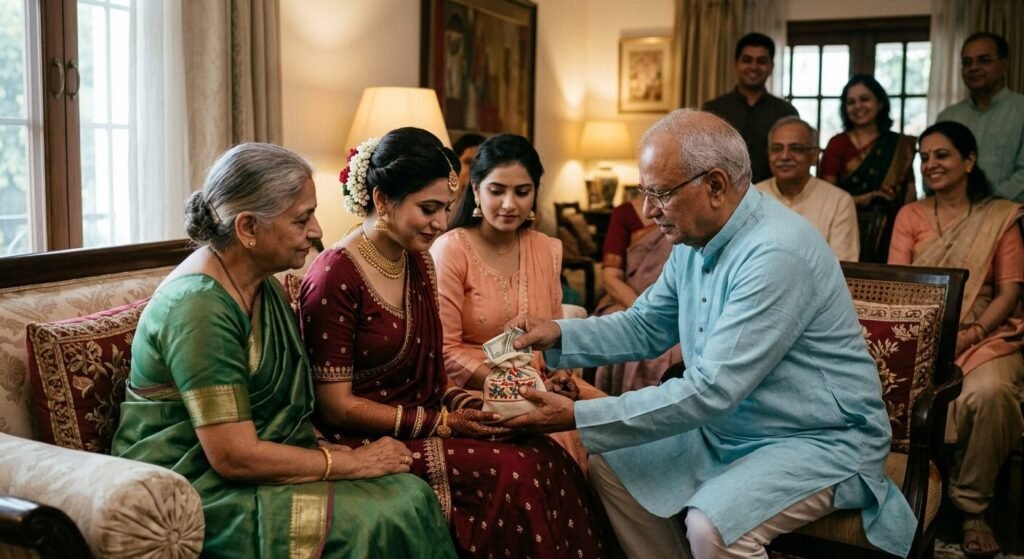
One of the more symbolically rich Marwari traditions, the Aanjhala Bharaai sees the groom’s father place a bag of money in the bride’s lap, which she is then expected to divide equally among her sisters-in-law and her husband — a custom meant to demonstrate the financial responsibility she’ll be trusted with in her new household. It’s a quiet, meaningful moment, and we photograph it closely, since it’s a ritual many families specifically want documented well given its significance within the community.
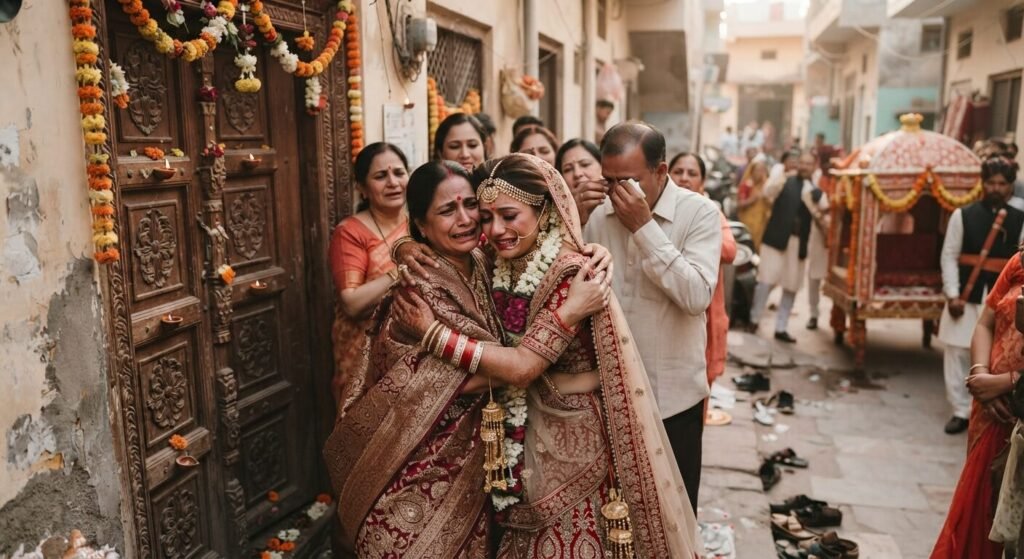
The Bidai marks the bride’s emotional departure from her family home, one of the most tearful moments of any Indian wedding, followed shortly after by the Griha Pravesh, where she’s welcomed into her new home, often tipping over a small vessel of rice with her foot to symbolise prosperity entering the household. We photograph the Bidai exactly as we do across every tradition we cover — quietly, without direction or repeated takes — before shifting into warmer, closer coverage as she’s welcomed at her new home
Bidai and Griha Pravesh — Farewell and Welcome
Our Approach to Delhi Wedding Photography
Delhi’s Baniya and Marwari weddings combine real scale with real ritual significance, and our coverage is built to serve both:
- Multi-venue, multi-day planning — Delhi weddings often move between a family home, a banquet hall, and a farmhouse property within a single weekend, and we plan logistics around that specific flow rather than a generic single-venue template.
- Community-specific detail — rituals like the Thamb Pooja and Aanjhala Bharaai are treated as dedicated, planned-for moments, not incidental background, since they’re what distinguish a genuinely Marwari or Baniya wedding from a generic North Indian one.
- Scale where it’s earned — the Sangeet and Baraat get full cinematic, high-energy coverage that matches the production values Delhi weddings are known for.
- Stillness where it matters — the Pheras, Sindoor Daan, and Bidai get quiet, minimal-intervention treatment regardless of how large the wedding around them is.
- Destination-ready — for Delhi families hosting weddings outside the capital, including in Bangalore, we bring the same attention to community-specific detail wherever the event takes place.
What Couples Say
Frequently Asked Questions
Do Baniya and Marwari weddings in Delhi follow the same rituals?
There’s significant overlap, but some rituals — like the Thamb Pooja and the groom having mehndi applied — are more specifically Marwari, while others, like the Kangan Khilai, are widely shared across Baniya communities more broadly. We confirm your family’s specific customs in advance so our coverage plan matches your actual wedding.
Can you handle a wedding that moves across multiple venues in one weekend?
Yes, this is extremely common in Delhi weddings, and we plan our team’s logistics and timing around exactly this kind of multi-venue, multi-day schedule.
Do you photograph Delhi weddings hosted outside the city?
Yes — many Delhi-based Baniya and Marwari families now host weddings in cities like Bangalore, and we bring the same attention to community-specific ritual detail regardless of where the wedding takes place.
Will you make sure not to miss smaller rituals like the Thamb Pooja or Aanjhala Bharaai?
Yes, we specifically confirm which of these rituals your family observes in advance, since they’re easy for an unfamiliar photographer to overlook amid the scale of a larger Delhi wedding.
How soon after the wedding do we receive our photos?
Edited previews are typically shared within a few days, with the full gallery delivered on a timeline confirmed in advance based on the scope of coverage.
Ready to Document Your Delhi Wedding, Ritual by Ritual? Let’s Talk.