
Rohtak — Hisar — Destination — Roka to Vidaai
Haryanvi wedding photography, every ritual documented
From the Roka to the Vidaai, candid coverage of Jat and Ahir wedding traditions, in Haryana or wherever your wedding takes you.
Contact Us →Every ritual, covered
A Haryanvi wedding carries the weight of a civilisation that has never forgotten where it came from — folk songs sung at dawn, a groom’s procession that feels almost martial in its pride, a whole night spent awake in celebration before the actual ceremony even begins. At Yatish Photography, we photograph Haryanvi weddings — Jat, Ahir, Brahmin, Rajput, Gujjar, and Bishnoi families alike — whether hosted in Haryana itself or as a destination wedding in Bangalore, with the same instinct that guides all our regional work: document the ritual as it actually happens, not as a generic template assumes it should.
Haryanvi wedding customs are shaped by the state’s agrarian roots and its strong community identities, and small details — which community observes Chak Puja, how the Ratjika unfolds, the specific order of the Ban Baithna — genuinely differ between families. We plan our coverage around your specific customs rather than assuming a one-size-fits-all North Indian wedding format.
Every Ritual of a Haryanvi Wedding
Roka — The First Formal Step
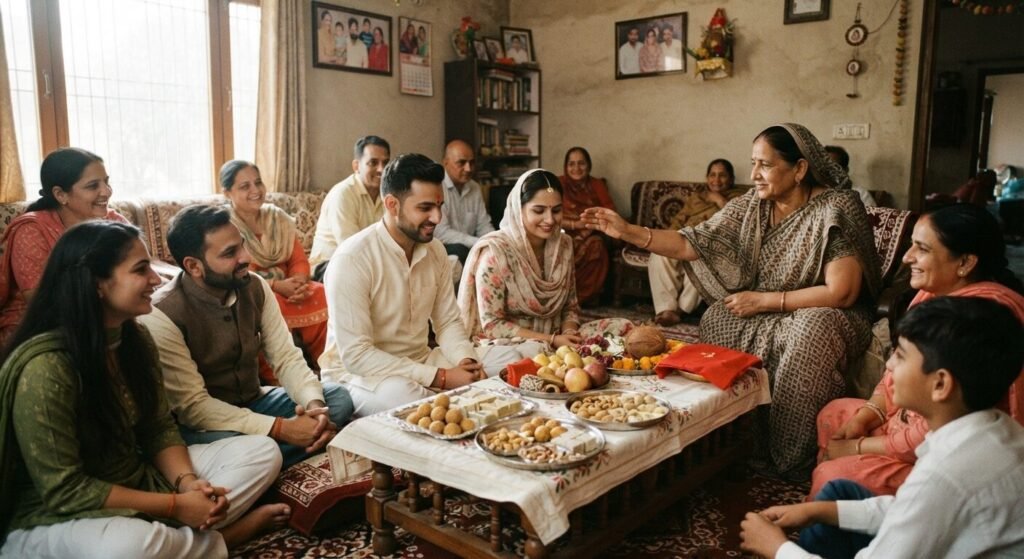
The Roka is the initial ceremony where both families formally agree to the marriage, with the groom’s family visiting the bride’s home carrying gifts and sweets to mark the start of the relationship. It’s typically small and unhurried — more a family conversation than an event — and we photograph it that way: candid, close, and observational, focused on the actual gestures of agreement rather than a staged group photo.
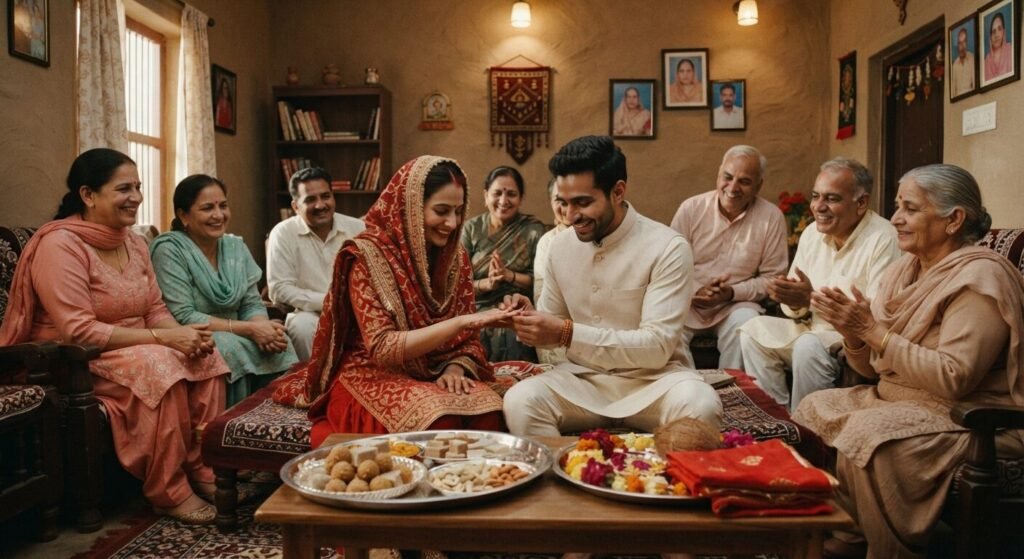
The Sagai formalises the couple’s intent to marry, followed by the Anguthi Pehnana, where wedding rings are exchanged between the bride and groom in the presence of both families as a symbol of their commitment. This is usually the first genuinely festive gathering of the wedding process, and we treat it as such — capturing the ring exchange itself in close detail, alongside the wider family reactions around it.
Sagai and Anguthi Pehnana — The Engagement
Ban Baithna and Gotra Puja — Seeking Blessings and Confirming Lineage
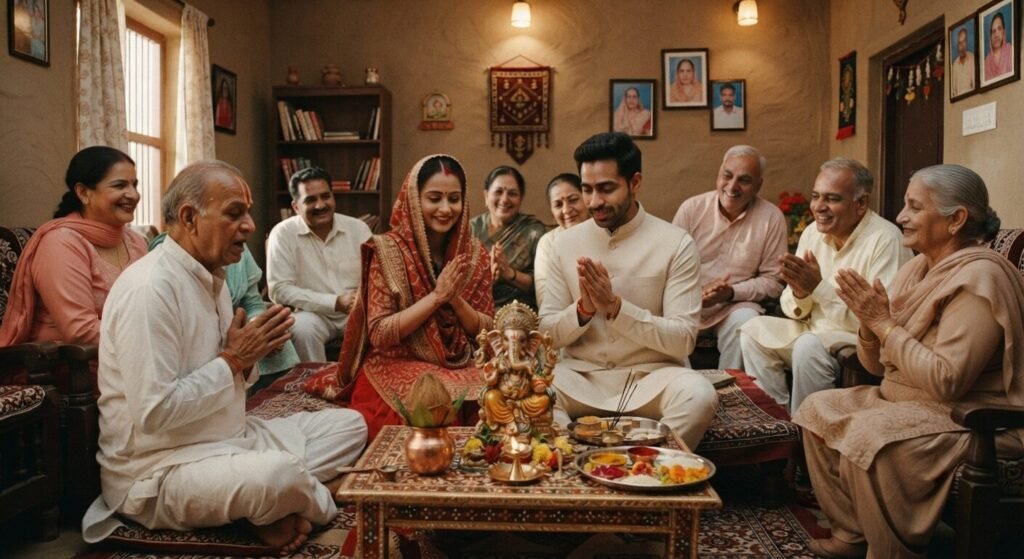
In the Ban Baithna, both families offer prayers to Lord Ganesha, seeking a peaceful and obstacle-free path to the wedding, while a separate Gotra Puja — a recitation and worship of both families’ ancestral lineages — is performed before the main ceremony to formally confirm that the match adheres to traditional gotra rules. These are quieter, priest-led rituals, usually attended only by close family, and we photograph them with restraint — soft available light, minimal movement, and attention to the specific puja items involved.
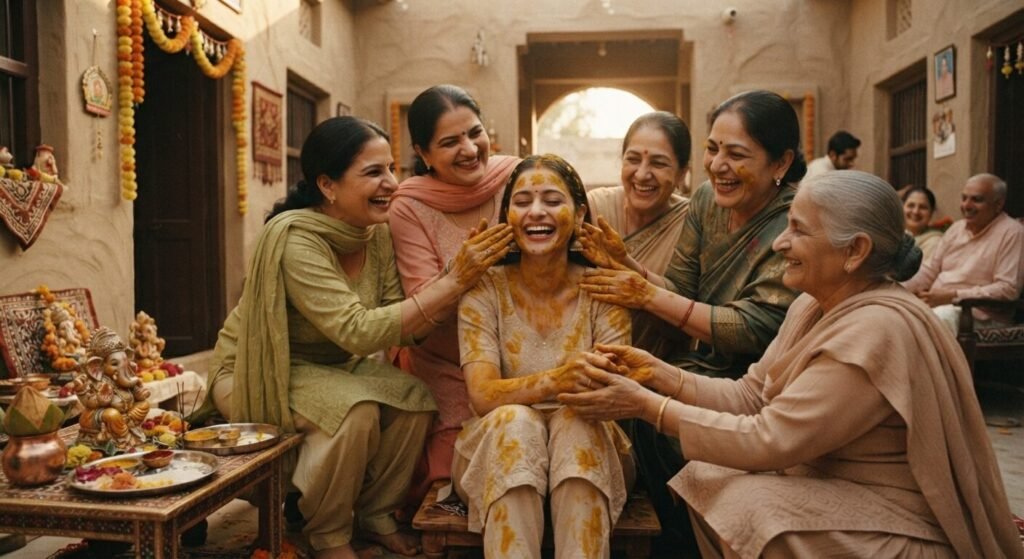
The Pithi Lagana, similar in spirit to a Haldi ceremony elsewhere in North India, involves applying a paste of turmeric, ghee, and ground barley to the bride, intended to give her a fairer, glowing complexion ahead of the wedding day. It’s a warm, hands-on ritual usually performed by the women of the family, and we shoot it candidly — the paste being applied, the bride’s reactions, the surrounding laughter — rather than posing it as a formal portrait moment.
Pithi Lagana — Turmeric for a Glowing Bride
Banori — A Shared Meal at the Priest's House
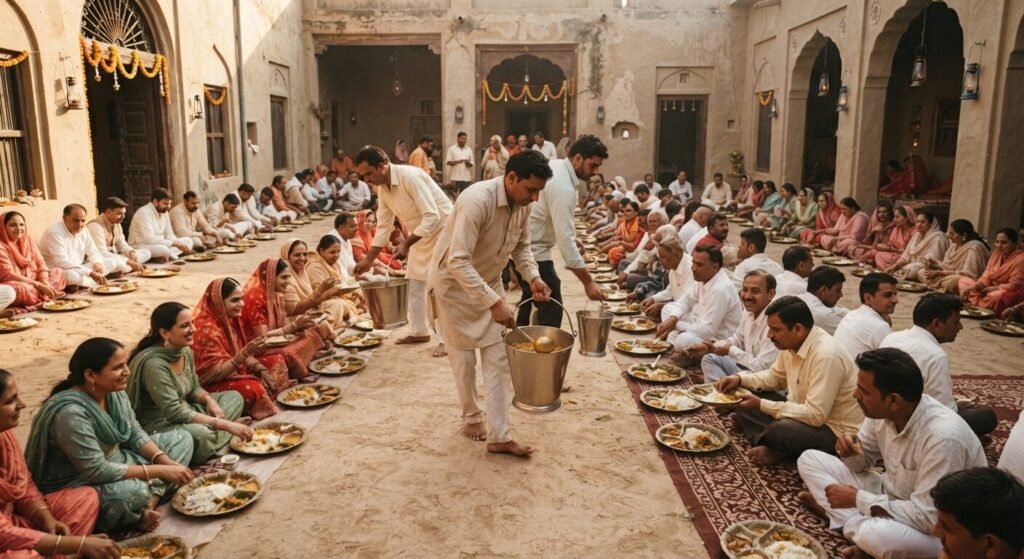
In the Banori ritual, the bride and groom each have a meal at the wedding priest’s house along with close relatives, a custom rooted in the belief that they should not eat at their own homes during this period of the wedding. It’s a small, intimate gathering, and while it’s easy to overlook photographically, we recommend including it in coverage since it’s one of the more distinctly Haryanvi customs that families often want documented once they realise an outside photographer might otherwise miss it entirely.
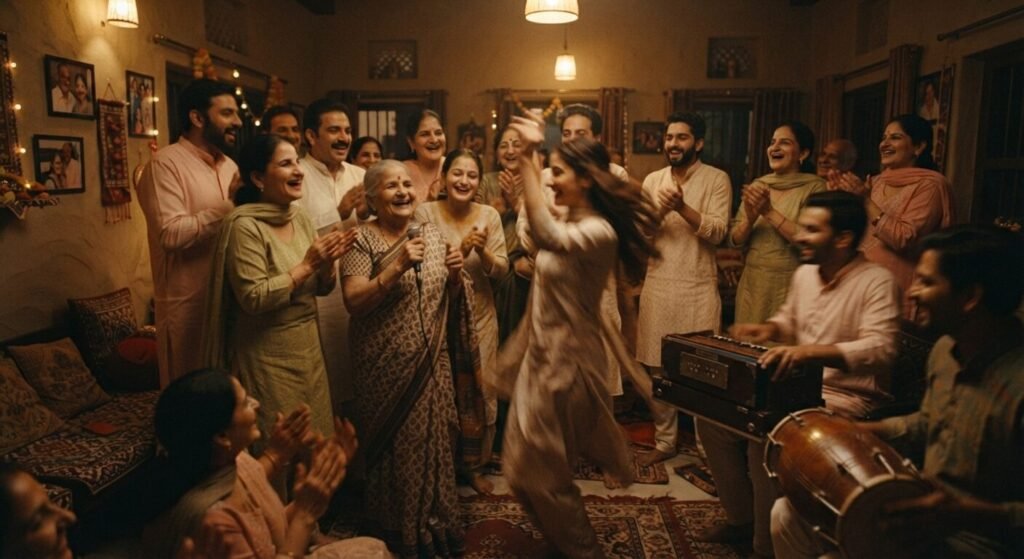
The night before the wedding is given over to the Ratjika, where family members stay awake through the night singing folk songs and dancing in celebration, sometimes continuing into prayers to family deities. It’s one of the most atmospheric parts of the entire wedding — dim household lighting, genuine late-night energy, and folk music that doesn’t stop for a camera. We shoot the Ratjika with low-light, candid technique, letting the mood of the night carry the photographs rather than adding artificial light that would flatten the atmosphere.
Ratjika — The Night of Songs
Mehndi — Henna and Song
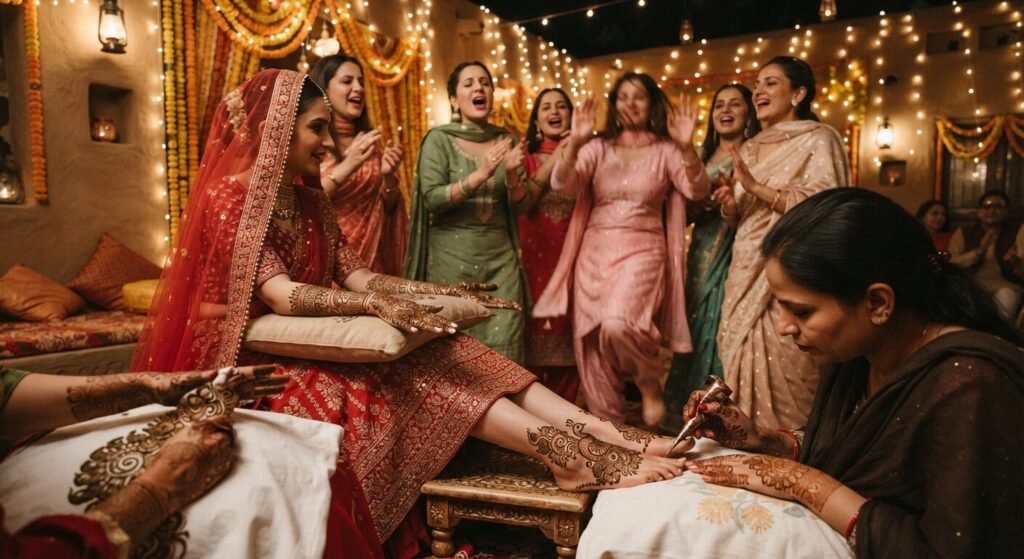
Held a day or two before the wedding, the Mehndi ceremony sees intricate henna patterns applied to the bride’s hands and feet, accompanied by songs and dancing from her female relatives and friends. As with our approach elsewhere, we split coverage between macro detail of the henna artistry and wider candid shots of the singing and dancing happening around the bride.
The Khichai is a large community feast hosted at the groom’s house, where relatives and villagers are served a traditional meal of rice and daal, reflecting the strongly communal character of Haryanvi weddings. This is one of the rituals where the scale itself is the story — long rows of guests, shared plates, a genuinely village-wide gathering — and we shoot it with wide, documentary framing to capture that scale honestly.
Khichai — A Feast for the Village
Chak Puja — Honouring the Potter's Wheel
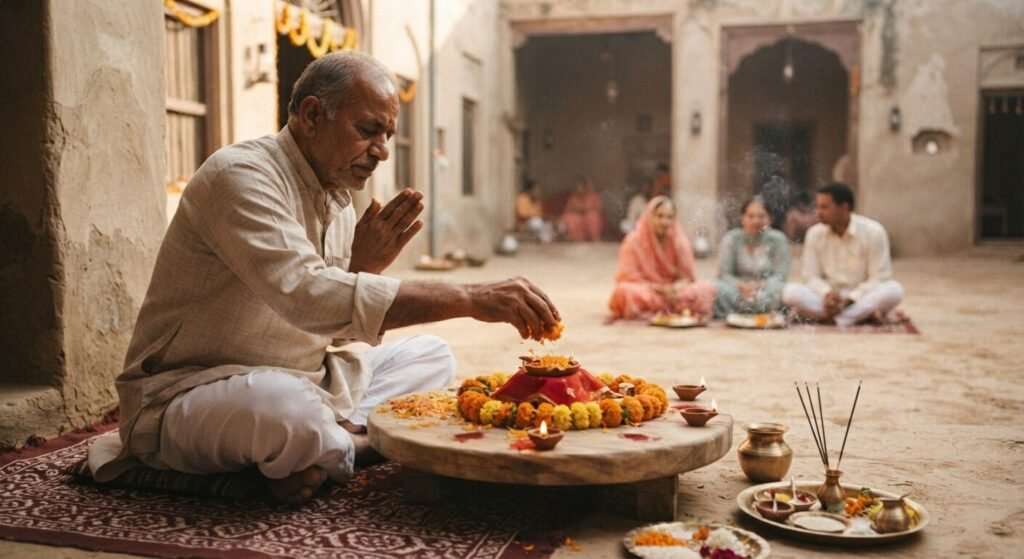
Particularly among Jat families, the Chak Puja involves worshipping the potter’s wheel before the wedding, a custom rooted in agrarian tradition and observed as an auspicious ritual ahead of the main ceremony. It’s a brief but symbolically significant moment, and we make a point of confirming with the family in advance whether this custom is observed, since it’s easy for an unfamiliar photographer to miss entirely.
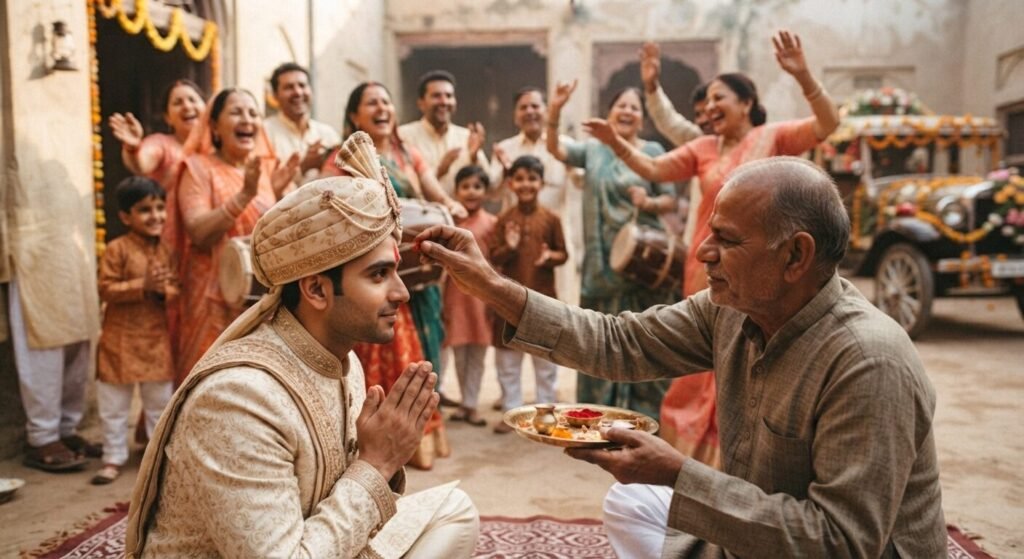
On the wedding day, the groom departs his home for the venue in a procession known as the Baraat Nikasi, with elders applying a ceremonial tilak on his forehead before he leaves, and relatives dancing and singing traditional songs throughout the journey. We cover the Nikasi in two stages — the tilak and blessing at home, shot close and quiet, followed by wide, high-energy coverage of the procession itself as it moves toward the venue.
Baraat Nikasi — The Groom's Departure
Jai Mala — The Garland Exchange
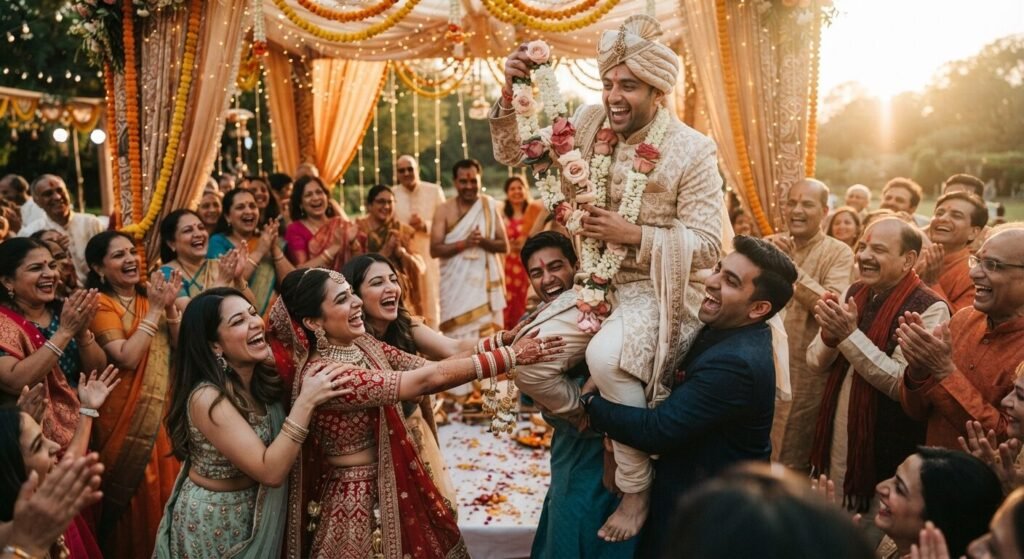
At the mandap, the bride and groom exchange floral garlands in the Jai Mala ceremony, a moment that often turns delightfully chaotic as brothers and cousins from both sides playfully try to prevent the exchange — lifting the groom higher, holding the bride back — before the garlands are finally exchanged to cheers from both families. We shoot this expecting the chaos, keeping a wide enough frame to capture the surrounding mischief rather than only the couple.
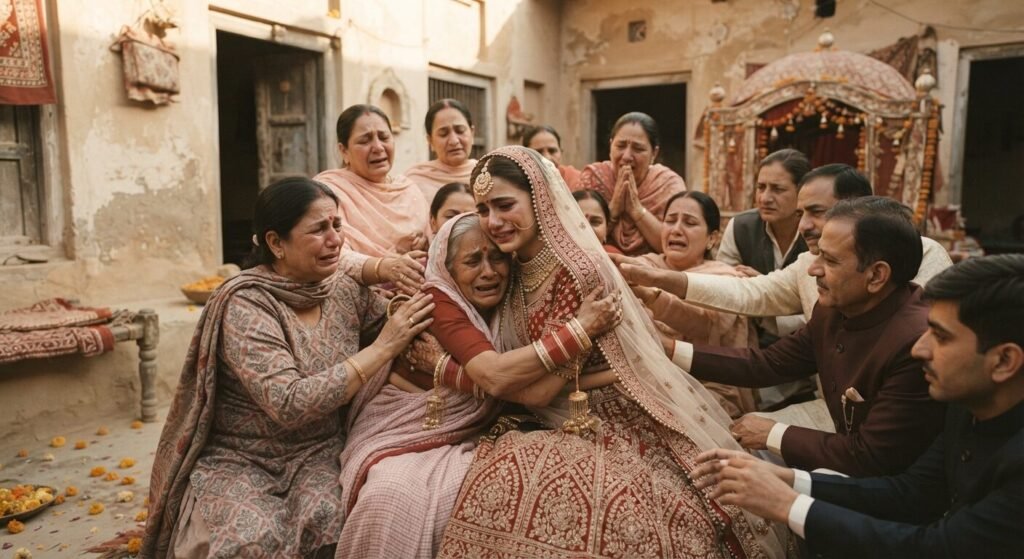
The Vidaai marks the bride’s emotional departure from her family home, with parents and siblings offering final blessings before she leaves to begin her married life — as in every Indian wedding tradition, this is typically the most tearful moment of the entire event. We treat the Vidaai exactly as we do across every regional wedding we cover: no direction, no repeated takes, a quiet and honest record of the goodbye.
Vidaai — The Bride's Farewell
Our Approach to Haryanvi Wedding Photography
Haryanvi weddings hold scale and intimacy in close balance, and our coverage reflects both sides of that:
- Community-specific planning — we confirm in advance which customs your family observes, since rituals like Chak Puja and the exact structure of the Ban Baithna vary by community.
- Genuine night coverage — the Ratjika deserves low-light, candid documentation rather than artificial lighting that would flatten its atmosphere, and we plan for that in advance.
- Scale where it’s earned — the Khichai feast and the Baraat Nikasi are shot wide and documentary, capturing the genuinely communal character of a Haryanvi wedding.
- Stillness where it matters — the Pheras, the Vidaai, and the quieter pujas get the same minimal-intervention treatment regardless of how large the wedding around them is.
- Destination-ready — for Haryanvi families hosting weddings outside the state, including in Bangalore, we bring the same attention to regional custom wherever the event takes place.
What Couples Say
Frequently Asked Questions
Do Haryanvi wedding rituals differ between communities?
Yes, while the broad structure is shared, some rituals like Chak Puja are more specific to Jat families, and the exact sequence of the Ban Baithna and Gotra Puja can vary. We confirm your family’s specific customs in advance so our coverage plan matches your actual wedding.
Can you cover overnight events like the Ratjika?
Yes, we plan specifically for low-light, candid coverage of the Ratjika, since it’s one of the most atmospheric parts of a Haryanvi wedding and deserves a different photographic approach than daytime rituals.
Do you travel to Haryana for weddings?
Yes, we regularly travel to towns and villages across Haryana, and we plan logistics around multi-location events that may span a family home, a priest’s house, and a separate wedding venue.
Do you photograph Haryanvi weddings hosted outside Haryana?
Yes — many families now host weddings in cities like Bangalore, and we bring the same attention to regional ritual detail regardless of where the wedding takes place.
How soon after the wedding do we receive our photos?
Edited previews are typically shared within a few days, with the full gallery delivered on a timeline confirmed in advance based on the scope of coverage.
Ready to Document Your Haryanvi Wedding, Ritual by Ritual? Let’s Talk.