
Dehradun — Almora — Destination — Roka to Vidai
Uttarakhand wedding photography, every ritual documented
From the Roka to the Vidai, candid coverage of Garhwali and Kumaoni rituals, in the hills or wherever your wedding takes you.
Contact Us →Every ritual, covered
A Pahadi wedding carries the quiet, unhurried character of the hills it comes from. There’s less spectacle and more sincerity — a Pichora draped by hand, a ring exchanged between two fathers before the couple ever says a word, a bride walking to a mountain spring in the middle of her own wedding to complete a ritual that has nothing to do with a stage or a guest list. At Yatish Photography, we photograph Garhwali and Kumaoni weddings — whether they take place in Dehradun, Almora, Pauri, or as a destination wedding hosted in Bangalore — with the same instinct we bring to every wedding: stay out of the way, and let the ritual speak.
Uttarakhand’s wedding customs vary meaningfully between the Garhwal and Kumaon regions, and further still among Jaunsari communities, but the emotional throughline is constant — these are weddings built on restraint, family closeness, and a handful of rituals that are genuinely unique to the region. We’ve learned to recognise and document those specifically, rather than photographing a Pahadi wedding the way we’d photograph any other North Indian wedding.
Every Ritual of a Garhwali and Kumaoni Wedding
Roka — Sealing the Alliance
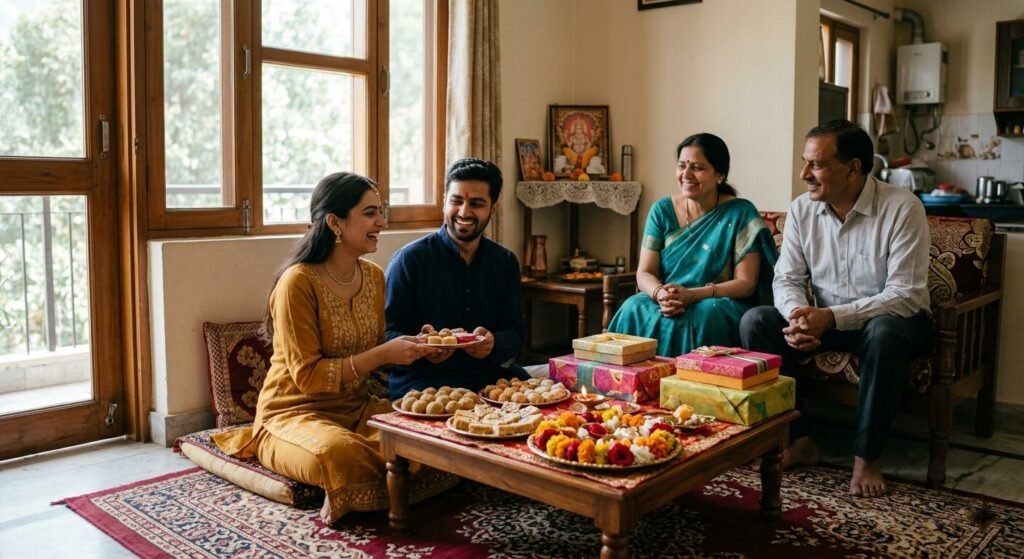
The Roka is the formal starting point, where both families meet to confirm the match and exchange gifts, marking their commitment to the marriage before any larger ceremony is planned. It’s usually a small, seated gathering — sweets are shared, a few words are exchanged between elders, and there’s very little performance to it. We shoot the Roka in a quiet, observational style: soft light, unposed framing, close attention to the small gestures — a gift being handed over, a nod between two fathers — that mark the actual moment a wedding becomes real for a family.
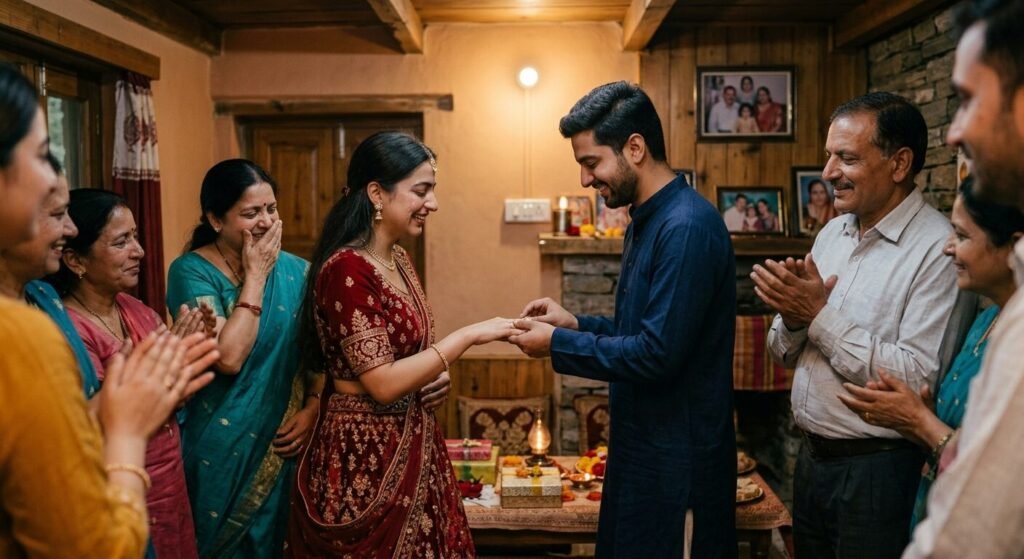
The engagement ceremony in many Kumaoni households carries a detail that surprises outsiders: rather than the bride and groom exchanging rings directly, it is often the fathers of the couple who exchange rings on their behalf, formalising the alliance between the two families before the couple’s own vows are made. In Garhwali households, the Sagai more commonly follows the familiar format of the couple exchanging rings themselves. Either way, this ceremony is treated as a significant, photographable moment in its own right — not a footnote before the “real” events. We shoot it with attention to who is actually performing the ritual in each specific family, since assuming the wrong version is one of the most common mistakes outside photographers make with Pahadi weddings.
Sagai or Mangni — The Ring Exchange, With a Regional Twist
Chatti and Sagun — Marking the Start of Preparations
The Chatti is a small ritual observed to mark an auspicious beginning to the wedding preparations, often involving a simple puja at home, while the Sagun involves a ceremonial exchange of gifts between the two families as the wedding date approaches. These are intimate, home-based rituals, usually attended only by close family, and they set the tone for everything that follows. We photograph these as documentary moments — the puja thali being prepared, gifts being wrapped and exchanged — since families often want a visual record of the preparation itself, not just the main event.
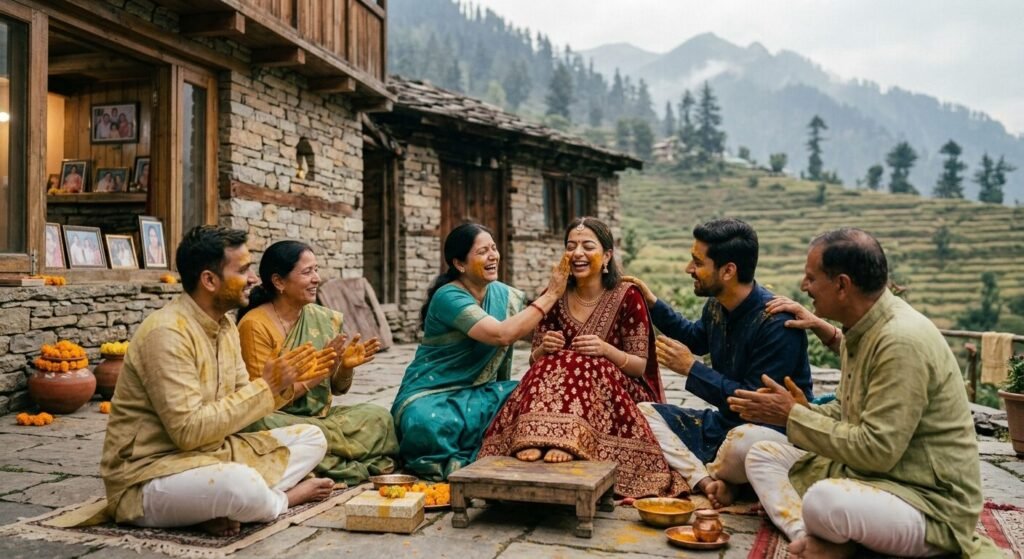
As in most North Indian weddings, the Haldi ceremony involves applying a turmeric paste to the bride and groom at their respective homes, as a blessing for good health and a radiant complexion before the wedding. In Pahadi households this tends to be a warmer, more relaxed affair than a large Haldi in the plains — often just close family, seated outdoors if the weather allows, with genuine laughter rather than a choreographed event. We shoot it candidly, favouring real reactions over staged application shots.
Haldi — Turmeric and Blessings
Mehendi — Quiet and Personal
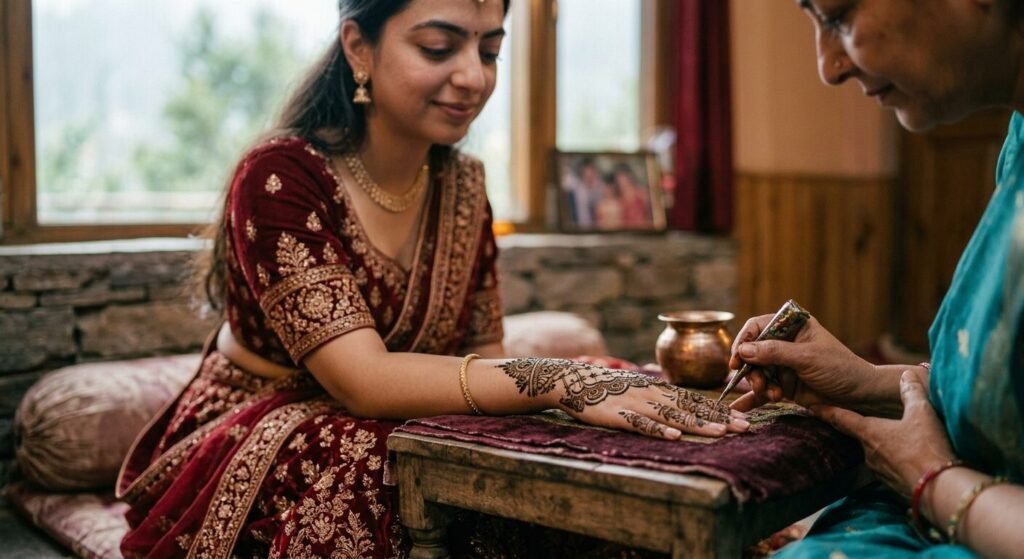
The Mehendi ceremony, where henna is applied to the bride’s hands and feet, typically follows the engagement and precedes the wedding itself. Compared to the large, performance-heavy Mehendi events common in Punjabi or Rajasthani weddings, a Pahadi Mehendi is usually more understated — a smaller gathering of women, soft conversation, and the bride sitting still while the artist works. We lean into macro photography here — the detail of the henna pattern, the bride’s expression as she waits — rather than wide crowd shots, since that’s a more honest representation of how the ceremony actually unfolds.
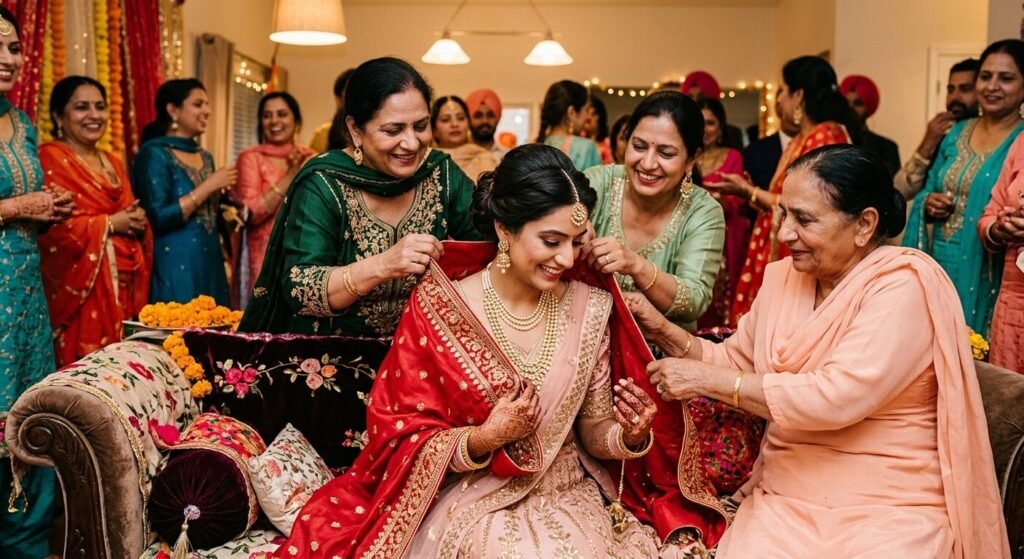
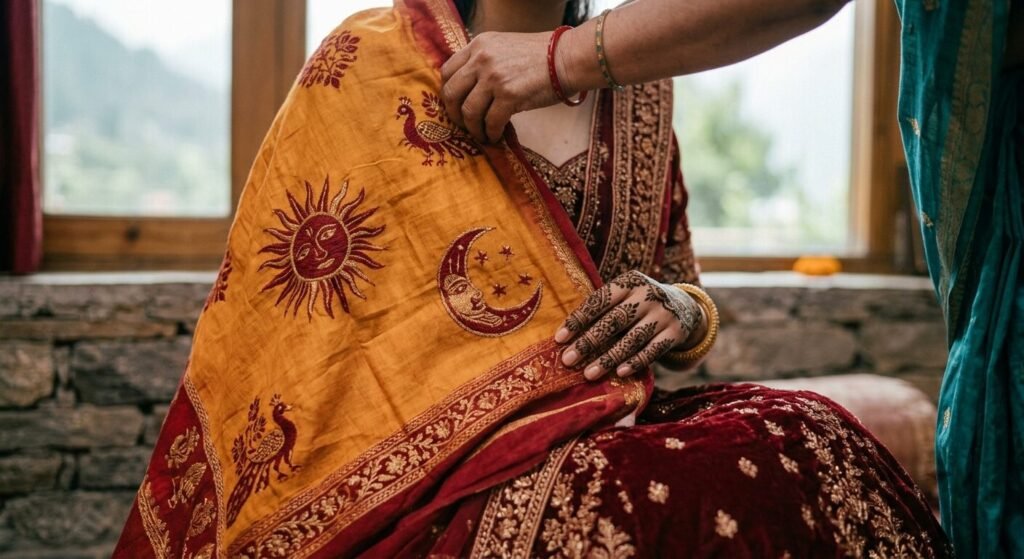
One of the most visually distinctive elements of a Garhwali or Kumaoni wedding is the bride’s Pichora — a traditional hand-dyed veil in saffron and red, decorated with motifs like the sun, moon, bells, and conch shells, draped over her saree during the wedding rituals. The draping of the Pichora is itself treated as a small ceremony, usually done by female relatives shortly before the main wedding rituals begin, and it’s a moment we specifically plan for in our shot list, since it’s one of the details that makes a Pahadi wedding immediately recognisable in photographs. We shoot this with attention to texture and colour — the hand-block printing, the way the saffron base catches natural light — because this single garment carries more regional identity than almost anything else in the wedding.
The Pichora Ceremony — A Ritual Unique to the Hills
Baraat and Dwar Puja — The Groom's Arrival
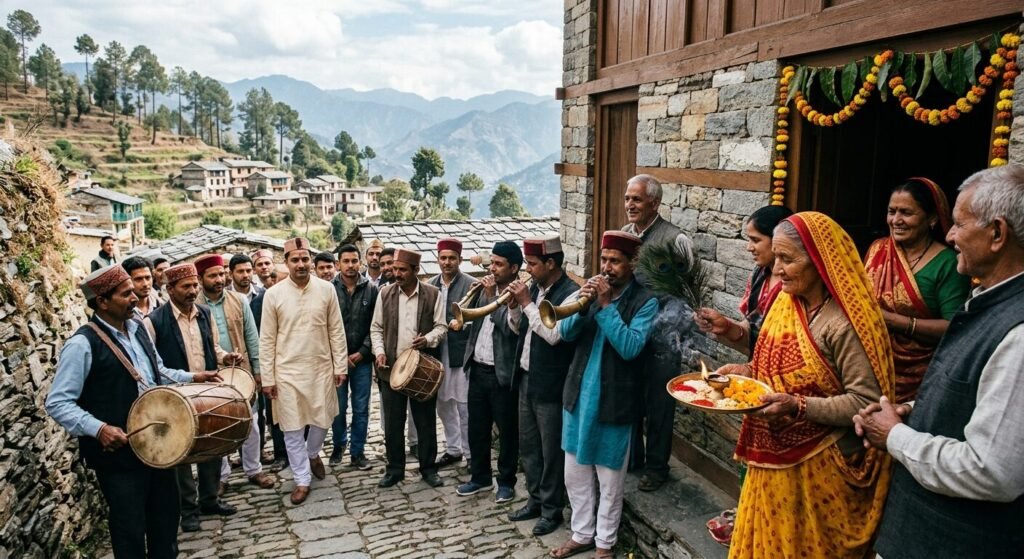
The groom’s Baraat, his processional arrival at the wedding venue, is generally more modest in scale than in Punjabi or Rajasthani weddings, often accompanied by traditional Pahadi music and dance rather than a large band. On arrival, the bride’s family performs the Dwar Puja, a doorway ritual welcoming the groom formally into the house or venue before he’s allowed to proceed to the ceremony space. We cover the Baraat with wide shots that capture the mood and music without exaggerating its scale beyond what it actually is, then shift to close, composed framing for the Dwar Puja, where the specific ritual actions — aarti, a tilak, blocking and then opening the doorway — matter and deserve clear documentation.
The Kanyadaan is considered one of the most significant rituals of the wedding, where the bride’s father places her hand into the groom’s, symbolically giving her away and asking him to accept her as an equal partner in life. It’s an emotionally charged, often tearful moment for the bride’s family, and one that deserves a still, respectful photographic approach — minimal movement, a clear view of the father’s expression as much as the couple’s. We shoot Kanyadaan the way we shoot any sacred, once-only moment: quietly, and without interrupting it for a better angle.
Kanyadaan — Giving Away the Bride
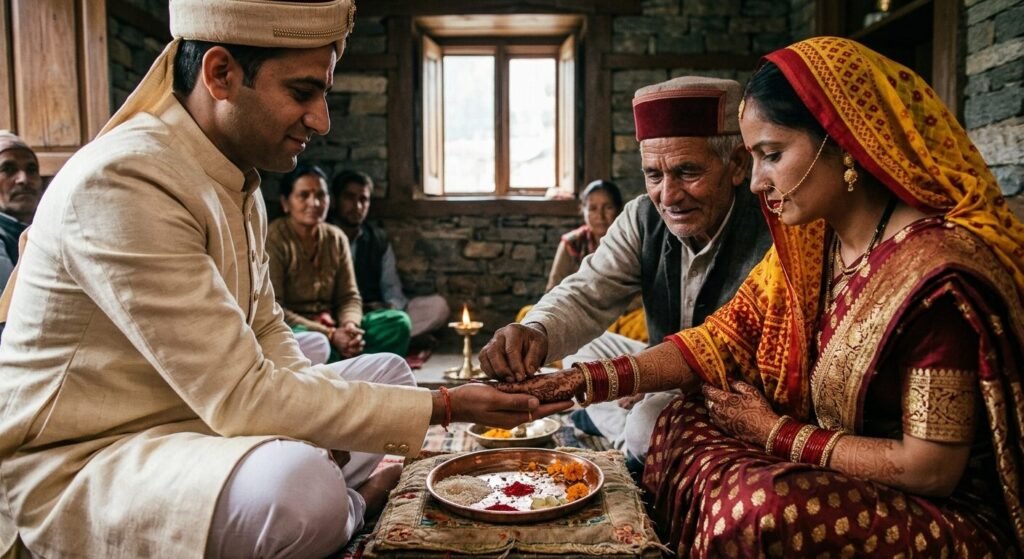
Saptapadi and Sindoor Daan — The Marriage Itself
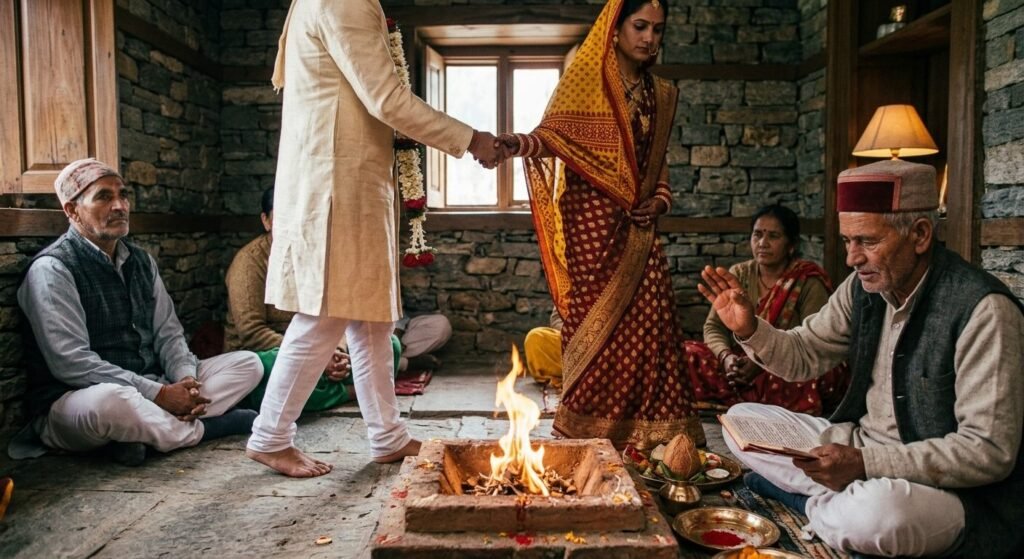
The couple takes seven steps together around the sacred fire — the Saptapadi — each step representing a specific vow and promise for their married life, after which the groom applies sindoor to the bride’s forehead as a mark of her new marital status. This is the ceremonial core of the wedding, usually conducted by a pandit with recitations in Sanskrit, and it calls for the same restraint we bring to any Anand Karaj or Christian ceremony — no flash, minimal repositioning, and full attention paid to capturing each of the seven steps individually rather than only the final moment.
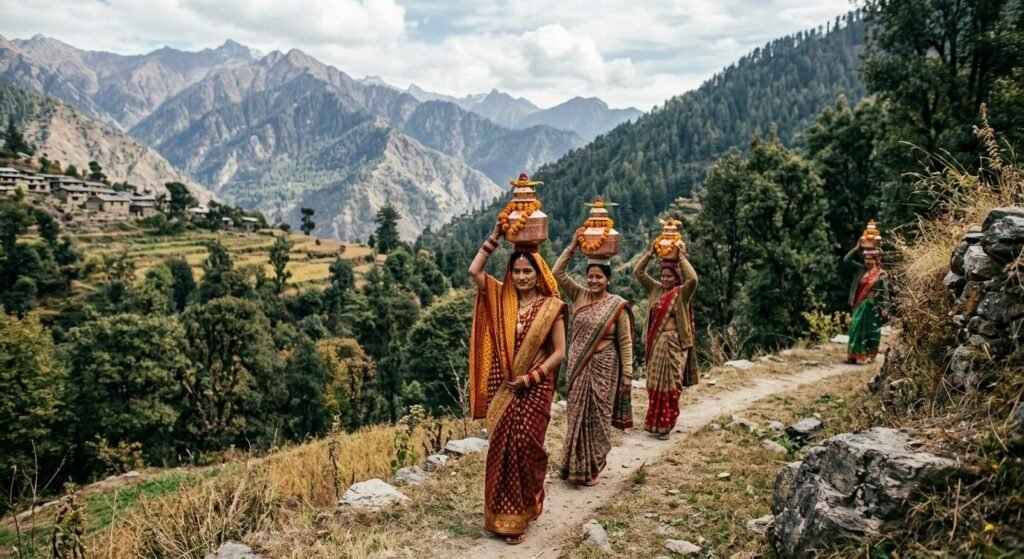
In a custom distinctive to the region, the bride and the women of her family walk to a natural water spring, known as a naula or dhara, carrying a kalash (urn) of water on their heads, where items used during the earlier puja rituals are ceremonially submerged. This ritual, usually performed after the main wedding rites, connects the wedding directly to the local landscape in a way few other Indian wedding traditions do, and it’s one of the moments we make a specific point of covering for hill-based weddings, since it rarely gets photographed well by teams unfamiliar with the custom. We shoot this outdoors, using natural light and the landscape itself as part of the composition — mountains or forest in the background, the procession of women walking together — rather than treating it as an isolated portrait moment.
Naula or Dhara Ritual — A Uniquely Pahadi Custom
Vidai — The Bride's Farewell
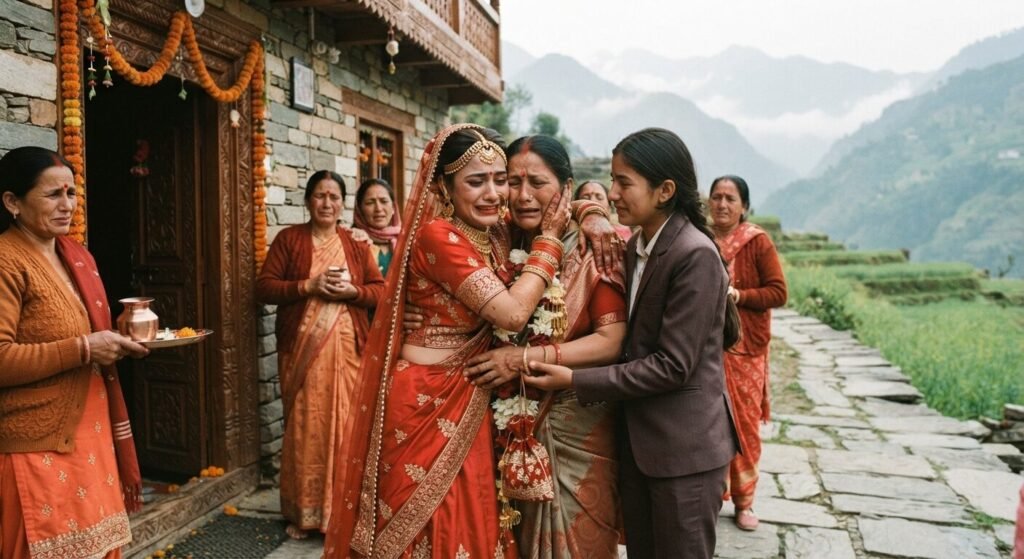
The Vidai marks the bride’s emotional departure from her family home, with her parents offering final blessings before she leaves with her husband, typically the most tearful moment of the entire wedding across almost every Indian wedding tradition, Pahadi weddings included. We photograph the Vidai exactly as we do the Doli in a Punjabi wedding — no direction, no repeated takes, capturing the goodbye as it genuinely happens.
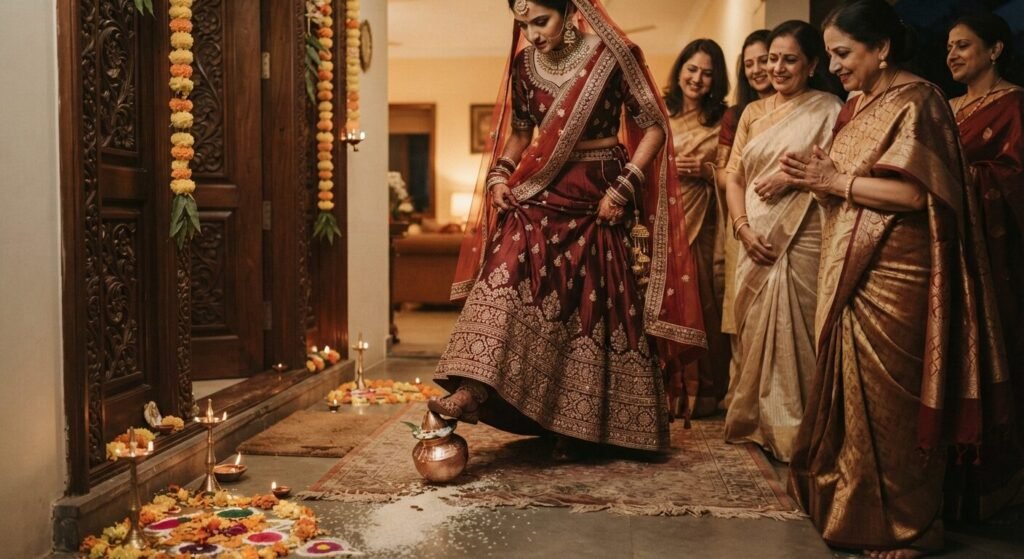
After the wedding, the bride is welcomed into her new home through the Griha Pravesh ritual, which typically involves her tipping over a small vessel of rice with her foot as she enters, symbolising the arrival of prosperity into the household. It’s a smaller, quieter ceremony usually attended by close family only, and it closes out the wedding story — the natural final chapter after the Vidai, and one we recommend including in coverage even though it happens after the “main” event is over.
Griha Pravesh — Welcoming the Bride Home
Our Approach to Uttarakhand Wedding Photography
Pahadi weddings reward a photography style built around restraint rather than spectacle. Our approach reflects that:
- Regional accuracy first — we plan our shot list around the specific customs of the family’s community, whether Garhwali, Kumaoni, or Jaunsari, rather than defaulting to a generic North Indian wedding template.
- A documentary, unobtrusive style — particularly for solemn rituals like the Kanyadaan, Saptapadi, and Vidai, where the goal is to capture what’s actually happening, not to direct it.
- Coverage for rituals often missed — the Pichora draping and the Naula/Dhara spring ritual are two of the most visually rich parts of a Pahadi wedding, and also two of the easiest for an unfamiliar team to overlook entirely.
- Destination-ready — many Uttarakhand families now host weddings outside the state, including in Bangalore. We bring the same regional attention to detail wherever the wedding is actually held.
- Landscape-aware composition — for weddings hosted in the hills themselves, we use the surrounding mountains, forests, and natural light as an active part of the photography, not just a scenic backdrop.
What Couples Say
Frequently Asked Questions
Do Garhwali and Kumaoni weddings have different rituals from each other?
Yes, while many core rituals overlap, some details differ meaningfully — for instance, the ring exchange in the Sagai ceremony is often performed between the two fathers in Kumaoni tradition, while Garhwali engagements more commonly follow the couple exchanging rings directly. We confirm your family’s specific customs in advance so our shot list matches your actual wedding, not a generalised version of it.
Can you travel to Uttarakhand for a wedding in the hills?
Yes, we regularly travel for weddings held in Dehradun, Almora, Nainital, Pauri, and other parts of Uttarakhand, and we plan logistics around venues that may have limited road access or require early-morning starts for natural light.
Do you photograph destination Pahadi weddings held outside Uttarakhand?
Yes — many Garhwali and Kumaoni families now host weddings in cities like Bangalore, and we bring the same attention to regional ritual detail regardless of where the wedding takes place.
Will you cover the Naula or Dhara spring ritual if our family observes it?
Yes, and we specifically recommend including it in your shot list if it’s part of your family’s tradition, since it’s one of the most visually distinctive parts of a Pahadi wedding and is often missed by photographers unfamiliar with the custom.
How soon after the wedding do we receive our photos?
Edited previews are typically shared within a few days of the wedding, with the full gallery delivered on a timeline confirmed in advance, based on the scope of coverage.
Ready to Document Your Pahadi Wedding, Ritual by Ritual? Let’s Talk.